
At the Dentist
It's bad.

So I’m in a dental chair, and it’s not going well.
This is not the fault of my dentist. His name is Brian, and he’s excellent. He’s also 14 years old. Not in real years, but in Dental Relativity Years, by which I mean relative to my previous dentist, a man named Stanley who worked on my teeth for decades until he retired at age 90.
I loved Stanley, although when I say that he worked “on” my teeth, what I actually mean is that he worked “in the vicinity of” my teeth. He couldn’t physically engage with my actual teeth because my mouth would never let him get near them. I have a severe gag reflex. I gag whenever anybody attempts to put things into my mouth, which unfortunately is a key element of modern dentistry.
I gag a LOT. You know that scene in the movie “Marathon Man,” where the evil fugitive Nazi dentist, played by Sir Laurence Olivier, uses dental implements to torture Dustin Hoffman, played by Dustin Hoffman? If a fugitive Nazi dentist ever tried that with me, he would instantly, before he had a chance to do any real torturing, find his entire upper body coated with whatever I ate for my previous three meals. It would be so disgusting that he’d give up dental torture on the spot and go into some other line of work, such as timeshare sales.
So my dental appointments have always been stressful. Stanley, a sweet and incredibly patient man, went to great lengths in his efforts to tend to my teeth without getting near enough to them to trigger my gagging. Sometimes it was so bad he couldn’t even be in the examination room with me. He’d stand out in the hallway and gently toss dental appliances such as crowns toward my mouth, in hopes that one would land somewhere near the problem. Yes I’m exaggerating, but not by much.
Unfortunately, over the years I’ve had quite a few dental issues. This is not my fault; it’s the fault of television. I grew up before ChatGPT was invented, so our primary source of information on health matters was TV commercials featuring men with authoritative baritone voices. For example, thanks to this authoritative baritone man...
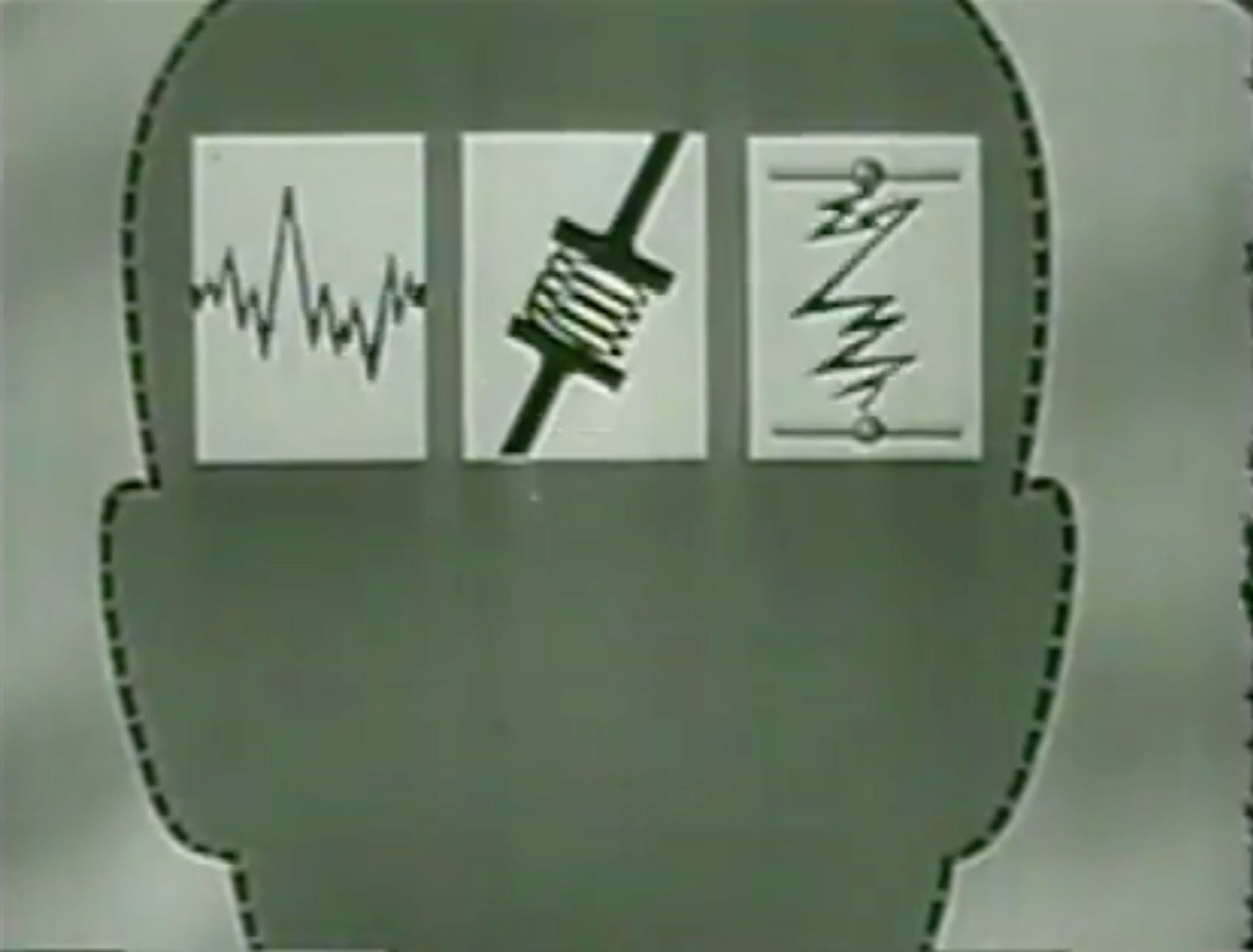
...we knew that the scientific cause of headaches, as explained in an Anacin commercial that aired 63,000,000,000,000 times per week, is little boxes containing a tightly coiled spring and jittery lines inside your brain, as we see in this x-ray image of an actual human skull:
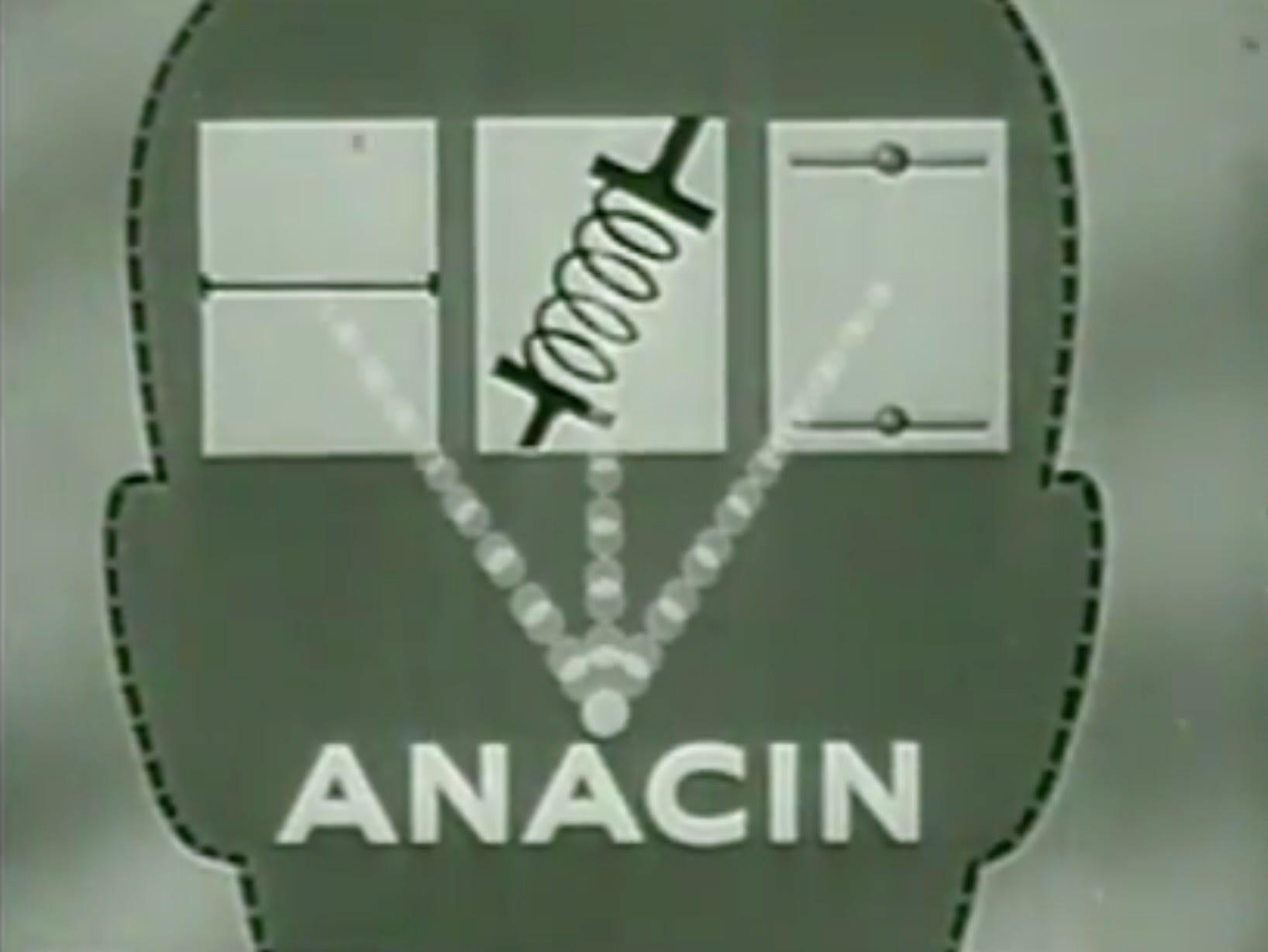
Fortunately, Anacin, which — unlike competing products — contains ingredients, can calm these jitterboxes down by beaming rays at them:
The commercials for dental products back then were equally scientific. Here’s a fine example in the form of a 1958 TV commercial for Colgate Dental Cream:
The authoritative baritone man in this commercial is Harry Von Zell, whose professional qualifications to inform the public on dental matters were (1) he was the announcer on The George Burns and Gracie Allen Show, and (2) the collar points on his shirt were approximately 17 feet apart.
The key scientific moment in this commercial comes at 0:16, when a mysterious man in the background suddenly, without warning and with no provocation, tries to kill Harry Von Zell with a horseshoe.
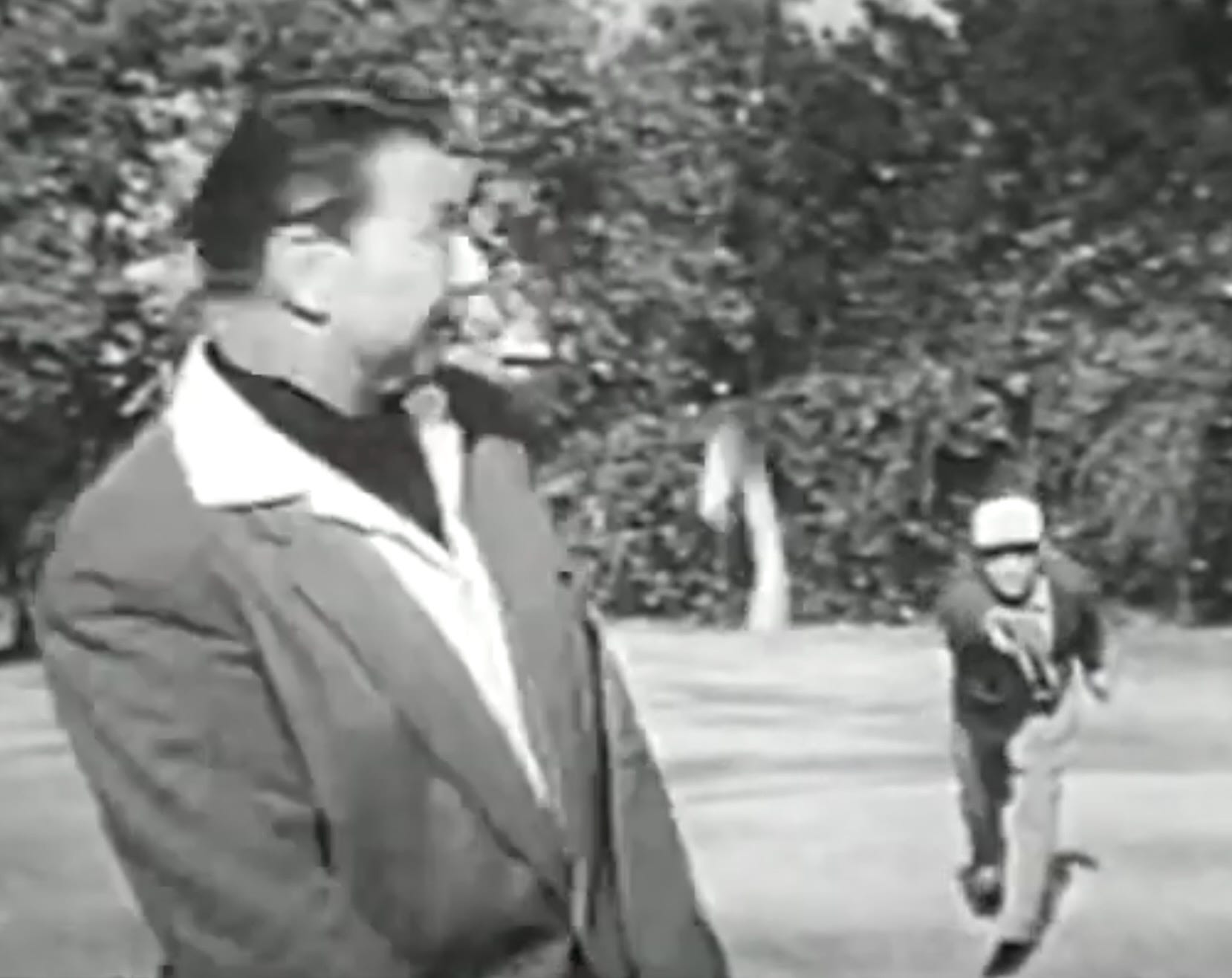
It is not clear why the man does this. Maybe he’s an unemployed baritone hoping to inherit Harry’s job. Maybe he just has strong views on men’s fashion. Whatever the reason, the important thing is that Harry is protected by an Invisible Protective Shield, exactly like the one that Colgate Dental Cream, thanks to a scientific ingredient called “Gardol,” erects around your teeth to protect them from tooth decay and blunt force trauma.
Another product protecting teeth scientifically back then was Ipana toothpaste, which did not contain Gardol but did have the capability to fight tooth decay in outer space, according to celebrity spokesrodent Bucky Beaver.

Here’s the thing, though. There are two words you do not hear Bucky Beaver or Harry Von Zell say; two words that were never, to my knowledge, uttered in any of the dental-product commercials of my youth. Those words are “gum disease.” So while we were dutifully brushing, many of us were not flossing. This was bad for our dental health. To use an analogy that even a layperson such as yourself can understand: Brushing without flossing is like painting the walls of a house, but ignoring the fact that the foundation of the house has developed periodontitis.
So over the years I spent a fair amount of time in a dental chair gagging on poor old Stanley. He labored heroically under impossible conditions, and sometimes, because I was such a bad patient, he had to resort to patchwork repairs on my teeth. I think there might be some duct tape in there. And now, as I grow old and all my bodily parts wilt and crumble, some of Stanley’s work needs to be redone.
Thus I find myself reclining in a high-tech dental chair looking up at my new teenage dentist, Brian, who, with the exuberant optimism of youth, believes he can repair the repairs to my teeth. He has estimated that this will take 90 minutes, but at our current rate of progress we’re looking at more like a fortnight. Because as I said at the beginning, it’s not going well. I’m hoping the patients out in Brian’s waiting room can’t hear the noises I’m making, because they’d probably flee the office. They might flee the country. That’s how badly I’m gagging.
After one particularly severe gag, Brian suggests using nitrous oxide, a.k.a. laughing gas. I’ve never had it; Stanley didn’t use it. I agree to try, but I’m frankly skeptical that it will stop my gagging. Nothing I’ve tried in the past has done any good. A few years ago I even went to a psychologist, who taught me a relaxation technique wherein I visualized being in a stress-free setting such as a tropical lagoon. This technique actually worked; the problem was, it worked only in the psychologist’s office. It failed disastrously in Stanley’s office, the key difference being that the psychologist never tried to put his hands into my mouth.
So I’m feeling skeptical when Brian’s plucky assistant, Monica, puts the nitrous oxide mask over my nose. I’m tensing up when Brian asks me to open wide as he leans forward with a dental implement. I’m thinking: Here it comes, here comes the gagging, I’m going to gag now, this is going to be bad and hey what’s that song I’m hearing on the dental office sound system? Yes! That’s “Brown Eyed Girl!” I love that song! I love Van Morrison! I love that guitar lick! I love music! I love Brian and his plucky dental assistant Monica! They are GREAT PEOPLE and they do a GREAT JOB and WE DON’T TRULY APPRECIATE THESE WONDERFUL DENTAL PROFESSIONALS and I AM GOING TO LEARN THAT GUITAR LICK and...
...and you get the idea. It turns out that nitrous oxide does a very good job of relaxing a person, as we can see in this actual x-ray image showing its effect on the human brain:
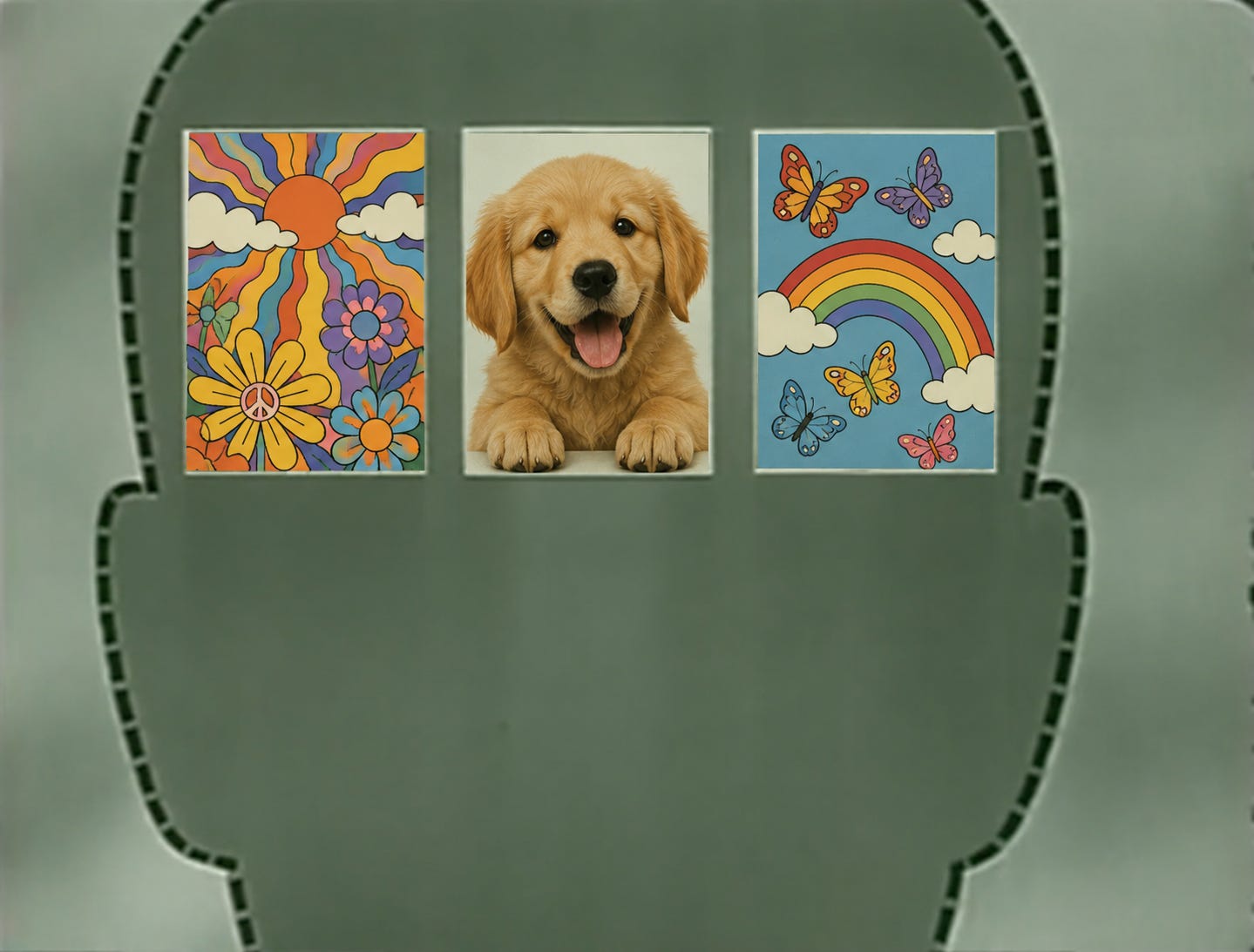
The result was that I had — I can’t believe I’m typing these words — a truly enjoyable dental appointment. It was more enjoyable than at least 40 percent of all the parties I have ever attended, especially the part when Brian, as he was about to attempt a tricky dental maneuver, briefly cranked the gas up to what he described as “Woodstock setting.” I did not gag at all. At one point Brian asked me if I wanted to stop for the day and finish the rest of the work another time, and I was like: “HELL no! Keep on dentisting! Feel free to replace my aortic valve while you’re at it!”
And maybe he did! I honestly don’t know.
Anyway, I’m feeling a lot better about going to the dentist now. And as a very late convert to nitrous oxide, I’m wondering if it might have other applications. I’m thinking particularly about its possible use in resolving international conflicts. It seems to me that if two hostile nations are deadlocked in tense negotiations, a tank of nitrous oxide could really lighten the mood.

Just a thought.
And now we turn, as always, to you lovely paying subscribers. Today we have three scientific polls. Also at the end we have a Baby Woodpecker Update.
Baby Woodpecker Update
Kelly Grinter at the Marathon Wild Bird Center sends this photo of volunteer CeCe with the baby woodpeckers, who are growing fast:
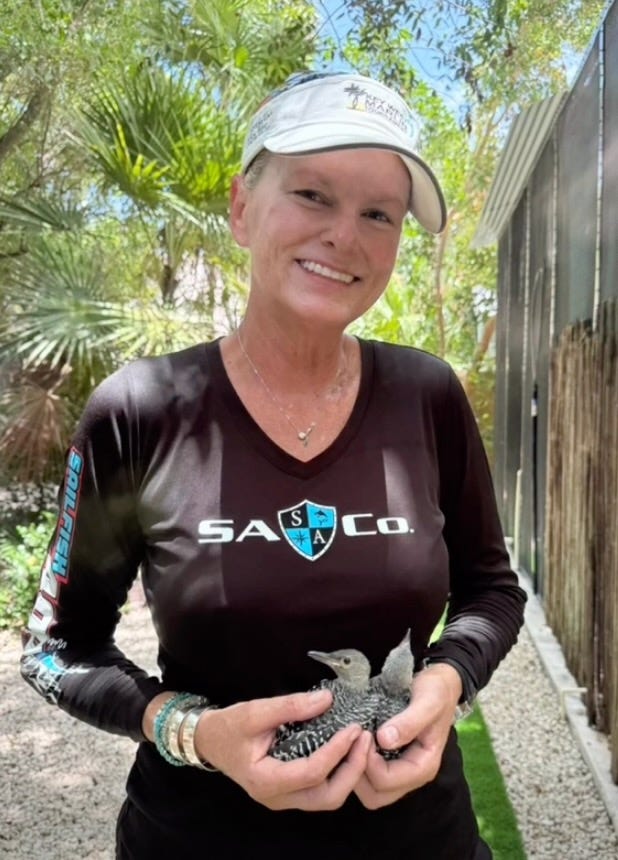
Kelly writes: Volunteer CeCe did a lot of work today to prep the outdoor enclosure for the two (out of 3) surviving red-bellied woodpecker nestlings! They are doing so well and growing like weeds. They have also shifted from nestling humming to the curly call of an older woodies. Probably with us another two weeks. Red-bellied woodpeckers are in the nesting cavity for almost 4 weeks before coming out to master their instinctive tree climbing skills. 🕊️ We do what we do with DONATIONS from you! 🕊️ Donate via VENMO @mwbc_birdrescue or visit this link.

Louie the Log says...
I know that when the Kingdom comes,
The Lord will see my shrunken gums.
They’ve harbored tartar, plaque, and moss,
Because I never, ever floss.
I’ve learned that microbes in my plaque
Can generate a heart attack,
And that my halitotic breath
May cause a sort of social death;
That those who smell my breath may faint:
My exhalations can peel paint.
My lifelong fear, just like Dave Barry’s,
Has led to proliferating caries.
For why would a tender youth be thrilled
When cavities are drilled and filled?
Those fillings, when they have installed ‘em
Are made with mercury amalgam.
(Some newer fillings are epoxic
They’re just as good and much less toxic.)
My mouth may harbor dental dams,
Be televised on dental cams;
And where the cams find gaps and ridges
The dentist can put dental bridges.
Is pulling out my teeth a plus?
I would then be edentulous.
With no teeth left inside my head,
At night, before I’d go to bed,
I’d see what those TV ads once meant
And brush my teeth with Polident.
One day when I was in middle school, my tongue got caught in the orthodontia wire behind my lower teeth. I was taken directly from school to the dentist’s office. While I sat in the victim chair waiting for the dentist, the assistant brought in a tray of tools featuring knives and saws. I was worried that the dentist wouldn’t be able to understand me when I would shout “Pleeth don cuh mah tun ow!”