
The World Cup
Get ready, America.

Without question, the greatest single event in the history of France — at least that I, personally, was involved in — happened on the night of June 12, 1998.
That was the night France won the World Cup, which is the ultimate achievement in the sport known everywhere in world, except those parts of the world located outside the United States, as “soccer.” (Under the metric system, it is called “football.”)
France was the host country for the 1998 World Cup, but it was not expected to win, or even to do particularly well. Back then France was not considered to be a serious soccer power. Even today, many observers, by which I mean me, have trouble taking seriously, as a sports power, a nation whose soccer fans display their fierce national pride by wearing chicken hats.
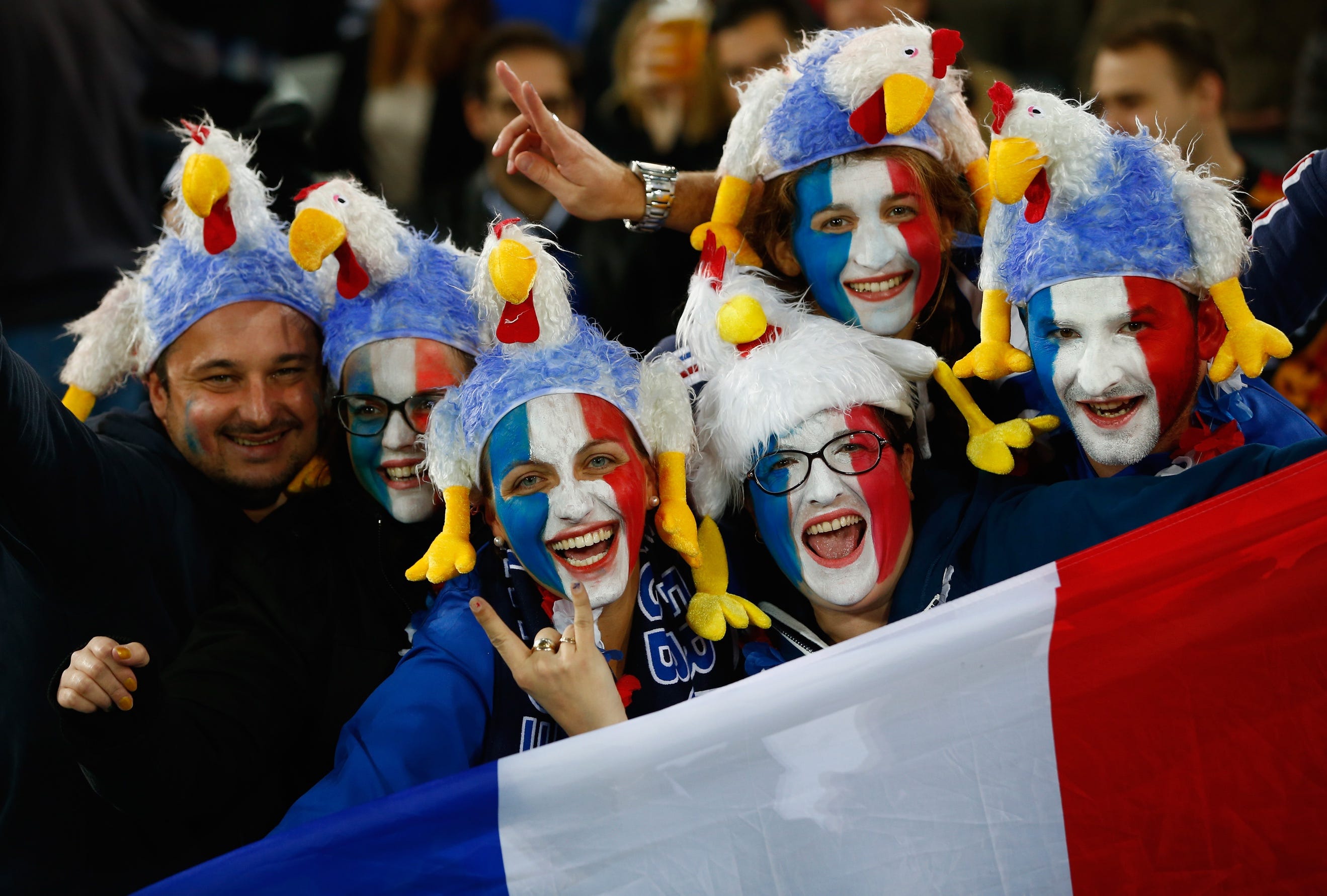
As if the chicken hats aren’t menacing enough, French fans also show their support for their team by — prepare to be intimidated — holding up baguettes. I’m serious: They brandish loaves of bread.
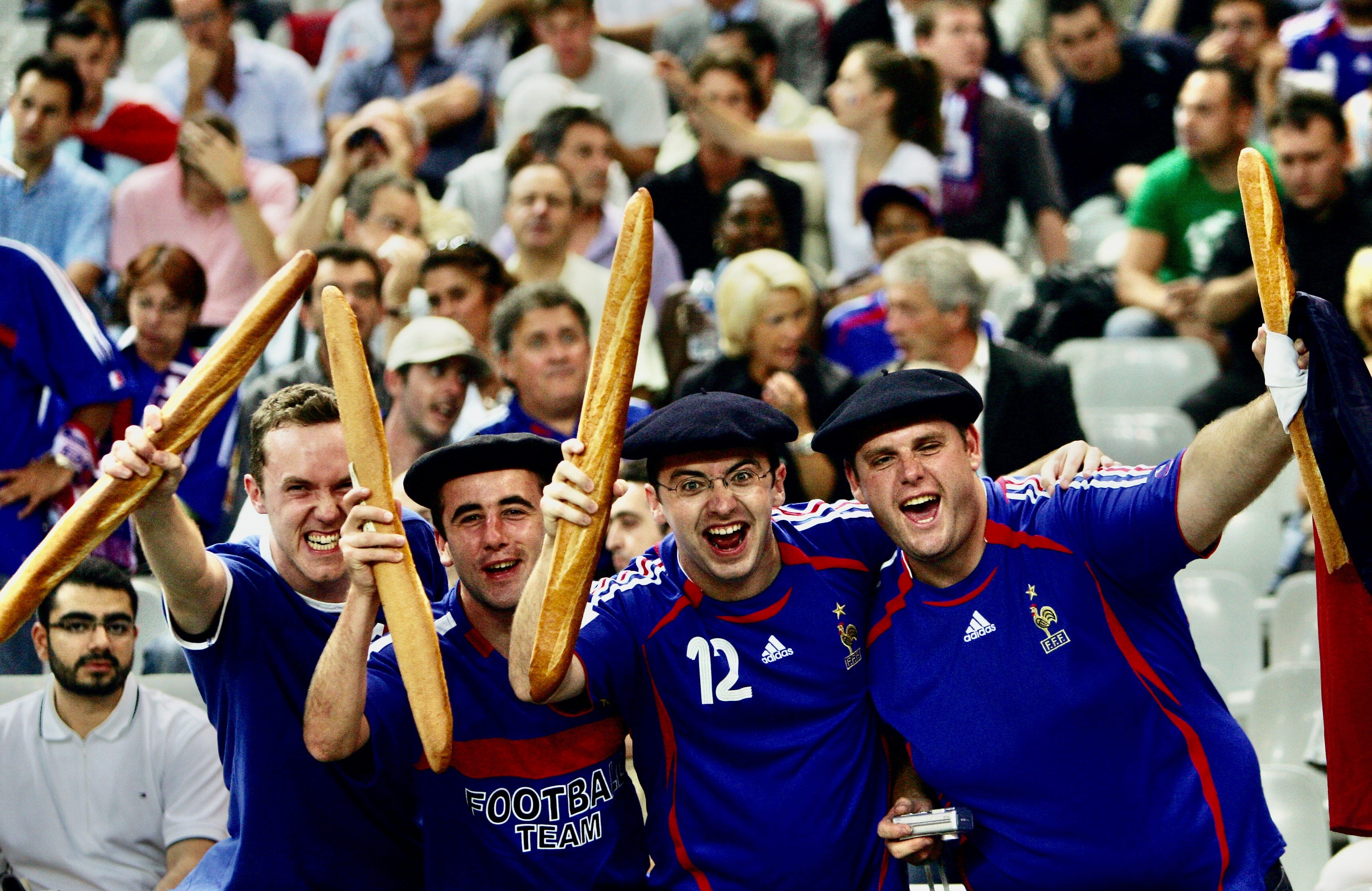
There’s nothing quite like the experience of being in a packed French soccer stadium when tens of thousands of Frenchpersons are thrusting their loaves skyward in unison while belting out the traditional Chant de Combat de la Baguette (”Baguette Fight Song”) which goes:
Nous encourageons notre équipe
À frapper le ballon fort
Aussi fort que la croûte de ces baguettes
Que nous avons délibérément laissées devenir un peu rassis même si cela va à l’encontre de tous nos instincts culinaires!
Which translates to:
We root for our team
To kick the ball hard
As hard as the crust on these baguettes
Which we have deliberately allowed to become a little stale even though this is contrary to every culinary instinct we have!
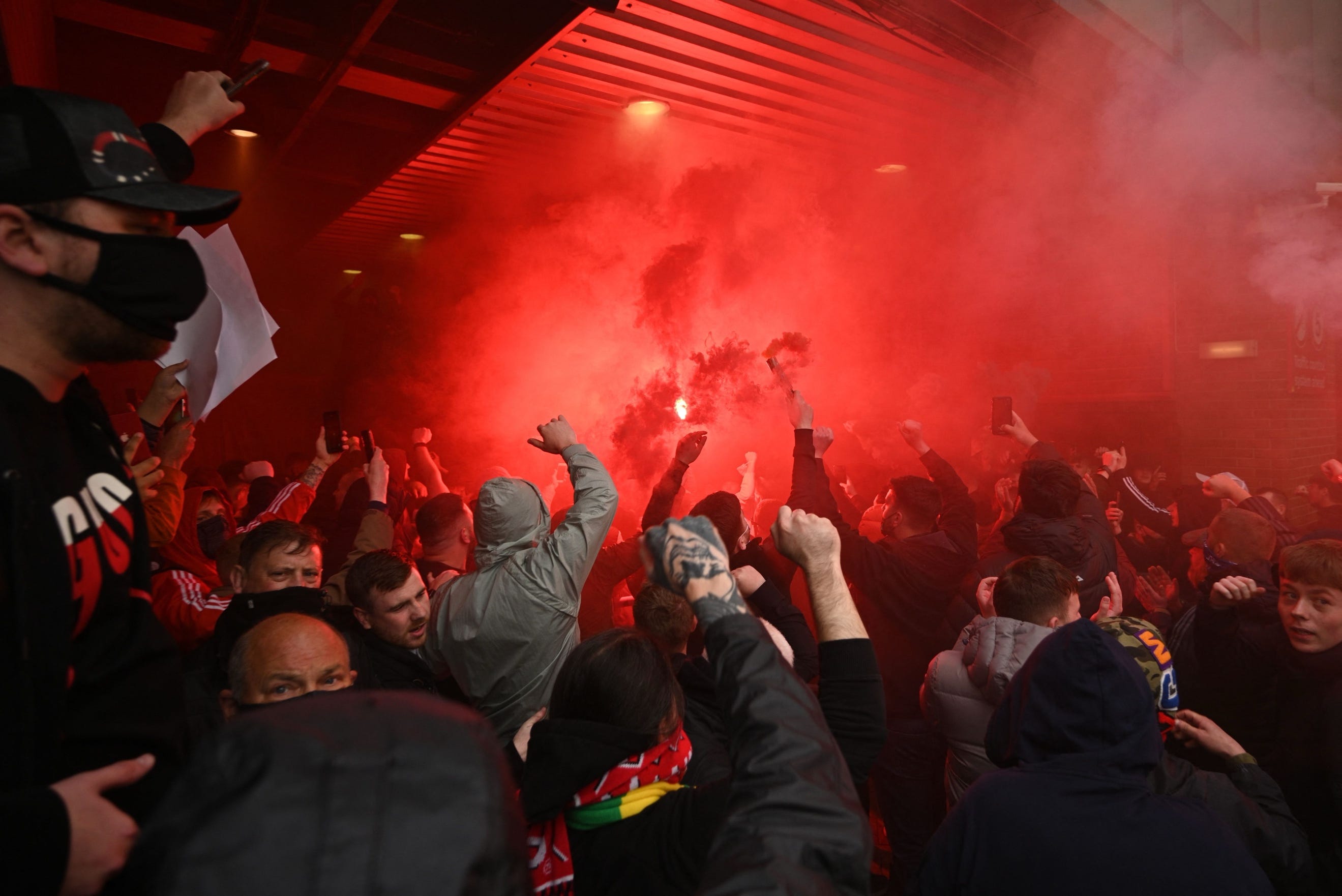
You cannot imagine the excitement generated by this song, mainly because I made it up. But my point is that French soccer fans, in general, are not scary, in contrast to English soccer fans, who have a reputation for using almost any excuse to become violent. For example, here are some English fans at an airport gate, reacting to the announcement that their group number has been called for boarding:
But without question the most spirited international soccer fans, as measured by blood alcohol content, are the Scots. The Scottish national soccer team is not particularly good at actually playing soccer, but the Scottish fans don’t care. They don’t go to the World Cup because they expect to win. They don’t necessarily expect to remember what specific nation the World Cup took place in. No, the Scots go to the World Cup to display their proud cultural heritage. Below is a photo of a Scottish soccer fan with his heritage on display. If you would prefer not to be exposed to it, close your eyes right now and do not reopen them until you have scrolled down to the second yellow sign.

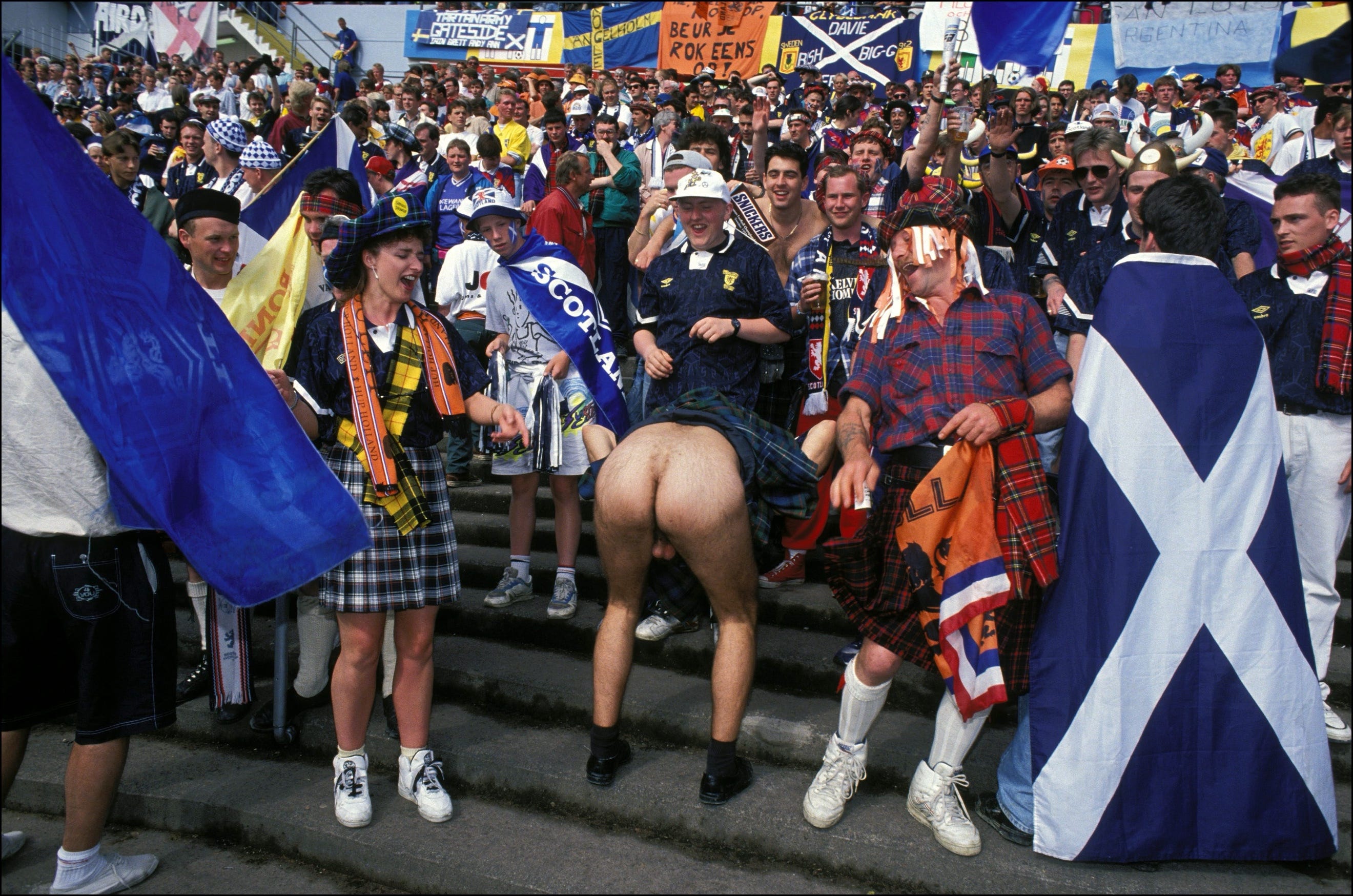

I warned you.
But getting back to the 1998 World Cup: Something like a million soccer fans descended on France that summer. Among them were me and my son Rob, who was 17. We flew to Paris in late June to join my wife, Michelle Kaufman, a sportswriter, who was already over there covering the World Cup.
When we arrived, Paris was a nonstop party, swarming with fans from dozens of nations, chanting, singing, dancing in the streets and festively hoisting their kilts. But the French themselves did not seem all that excited. At that time soccer was still a niche sport in France; the French had not yet become the chicken-hat-wearing, baguette-brandishing soccer lovers that they are today. So they were being a little snooty about the World Cup. They were bemused, in their sophisticated French way, by these crude, boisterous tourists from primitive ketchup-intensive nations, with their flags and their face paint, getting all excited about grown men kicking a ball. As a Parisian taxi driver explained to me and Rob, once he ascertained that we were Americans: “In France we do not care so much about the sports.” When he said “sports” — which he pronounced sporrrrrrts, making that “rrr” sound that can only be produced by French people, thanks to their mandatory national program of intense childhood uvula training — he made a face like a man who has just discovered a dead salamander in his croissant.
So even though they were hosting the biggest soccer tournament in the world, the French, at first, were pretty blasé about it.
At first.
But then they started to realize something: Their team was pretty good. Instead of losing as expected in one of the earlier rounds of the tournament, the French team kept winning. This was mainly because they had this badass player with the totally badass name of “Zinedine Zidane,” who was so badass that he could knock opposing players to the ground just by looking at them.
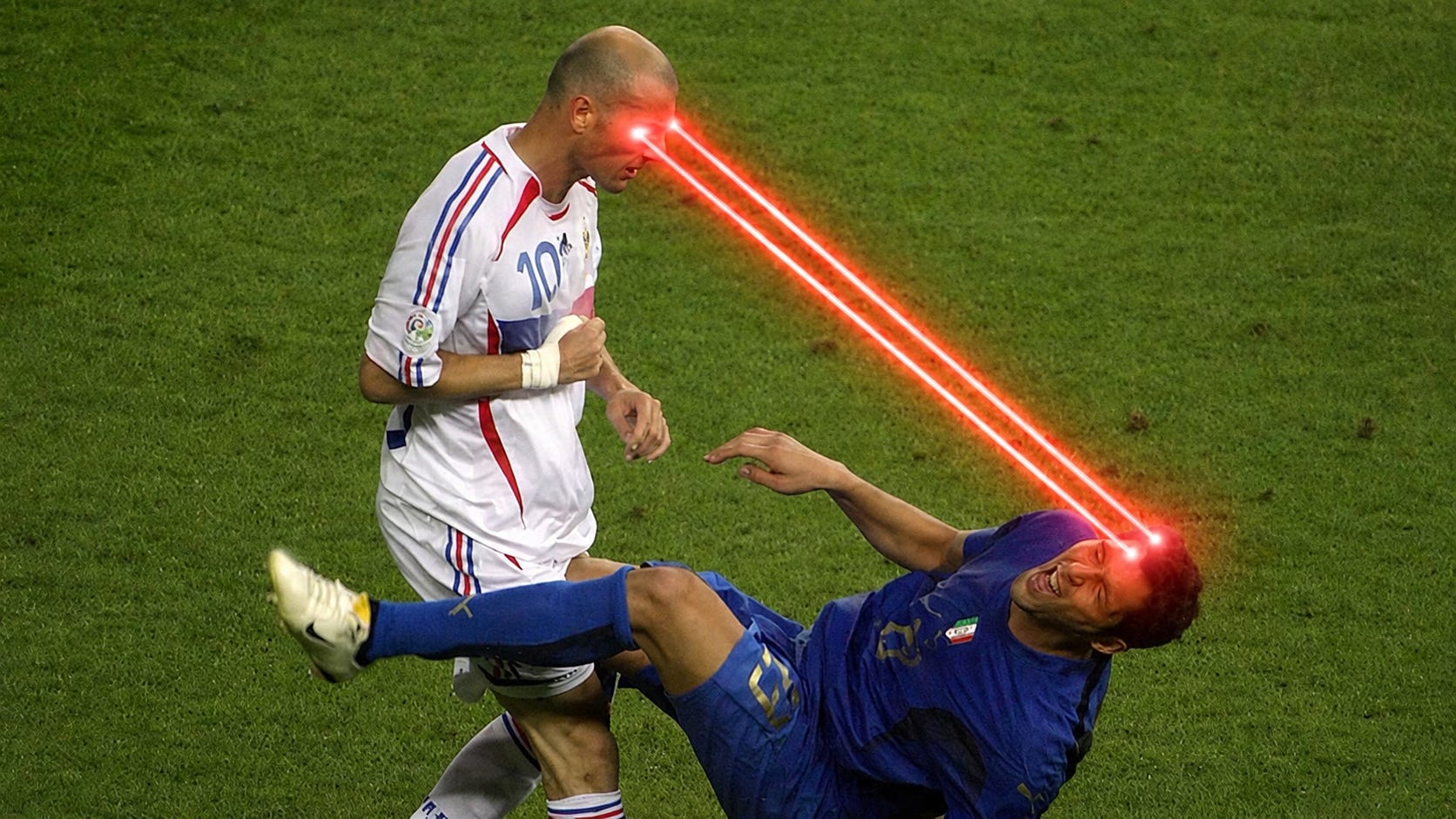
Every time their team won, the French became less snooty about the World Cup. You could see the snoot literally draining from their bodies. They started hanging French flags from their windows, and they figured out how to paint their faces. With each win Paris became an even bigger party, because now the hosts were joining in.
Michelle, Rob and I were staying in an apartment in the middle of Paris overlooking a popular hangout street called Rue de la Huchette (which means, literally, “Rue of the Huchette”). It was WILD down there, people from all over the world drinking and dancing and singing and, in the case of the Scots, spontaneously displaying their heritages. This went on every night, all night long. We got very little sleep. We didn’t care.
On July 8 the French team beat Croatia in the semifinals, which meant that France, for the first time, was going to the finals, to play for the world championship. Paris was now going insane. What made it perfect was that France’s opponent in the finals was Brazil, a soccer superpower, the defending champion and overwhelming favorite to win the cup. So the streets were teeming with Brazilians, who are — this is not my opinion; this is an objectively provable scientific fact — the best partiers on the planet. Nobody parties the way Brazilians do. Any given Brazilian, chosen at random, with no warmup, can out-dance the entire continent of Europe.
In the four days leading up to the final, Paris was the happiest city I’ve ever seen. The Brazilians were happy because they are just naturally happy, plus they were absolutely certain their team was going to win. The French were happy just to have gotten that far. And everybody, from whatever country, was happy to be in that beautiful place at that perfect time. It was magical; all of Paris was in a good mood. Even the waiters.
On July 12, the day of the final, Michelle, who had a press credential, went to the stadium to cover the game. Rob and I couldn’t get tickets — I doubt that the Pope could have gotten tickets — so we went to a bar near the Hôtel de Ville, where they’d set up some big-screen TVs. (The management didn’t care that Rob was only 17; in France, the legal drinking age is birth.)
The bar was packed to overcapacity, at least 200 people. About a third of them were Brazilians; the rest were mostly French, with maybe a dozen of us Americans sprinkled in. When the game started, the Brazilians, despite being a third of the crowd, were making 90 percent of the noise. They were VERY confident. And with good reason: Their team had experience, a winning tradition, and some of the best players in the world.
But there was one thing their team didn’t have.
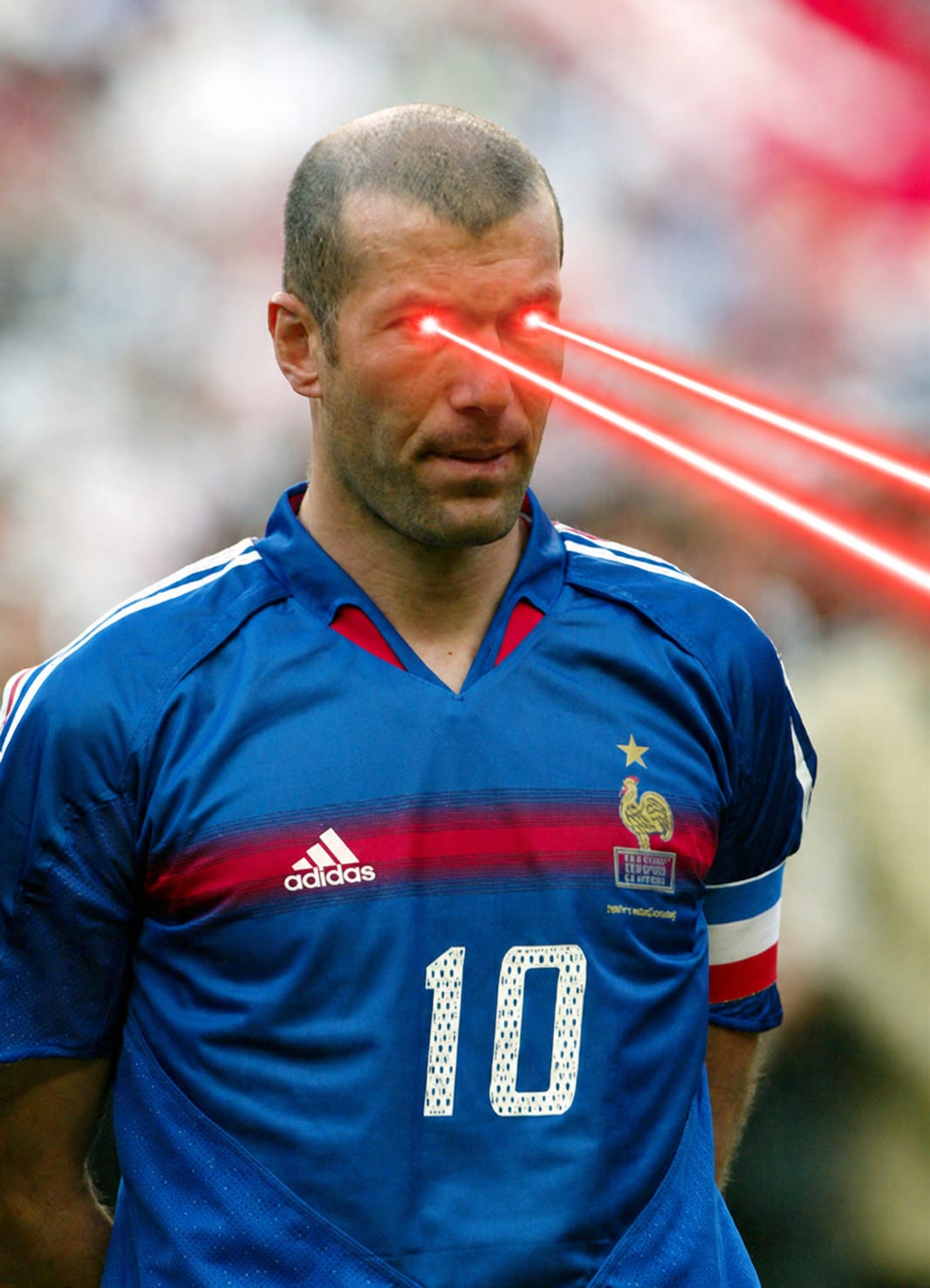
That’s right. They did not have Zinedine Zidane. Who, using only his badass balding head, scored two goals in the first half, thereby drastically altering the mood in the bar, as well as in the rest of France. At halftime the Brazilians, losing 2-0, were gamely trying to sound confident, but it was over. France went on to win 3-0, thereby plunging the Brazilians into a mood of bleak despair that lasted for maybe 15 minutes, after which they resumed partying, because that is who they are, and that is why we love them.
Meanwhile, France — the nation that, only weeks earlier, had not cared so much about the sports — was erupting with joy. By the time Rob and I left the bar, night was falling and the streets were filling with people — shouting, singing, hugging, laughing, crying. The crowd got thicker and thicker as people poured into central Paris to join the celebration. Rob and I got swept up, literally; we were caught inside a vast flowing river of ecstatic French people, and there was nothing to do but let them carry us wherever they were going. This turned out to be the Champs-Élysées, where something like a million people were celebrating their brains out. Everybody was kissing everybody. Believe it or not, French people, of all major genders, were kissing Rob and me, despite the fact that we were both visibly American.
“Remember this,” I told Rob, “because it is NEVER going to happen again.”
We finally made it back to our apartment around dawn, though the celebration was still going on. (It may still be going on.) Michelle got back from the stadium even later, because the roads were in chaos. So it was a long night, but also a great night. It was the best sporting event I’ve ever been part of, and I didn’t even see it in person.
The reason I bring these memories up, of course, is that in less than two weeks, the World Cup is coming to the United States, along with Mexico and Canada. It probably won’t be as dramatic as the 1998 tournament was, and I can pretty much guarantee that the U.S. team won’t win. But hear me out: It will be fun.
I know that many Americans, when they think of international soccer, picture something like this:
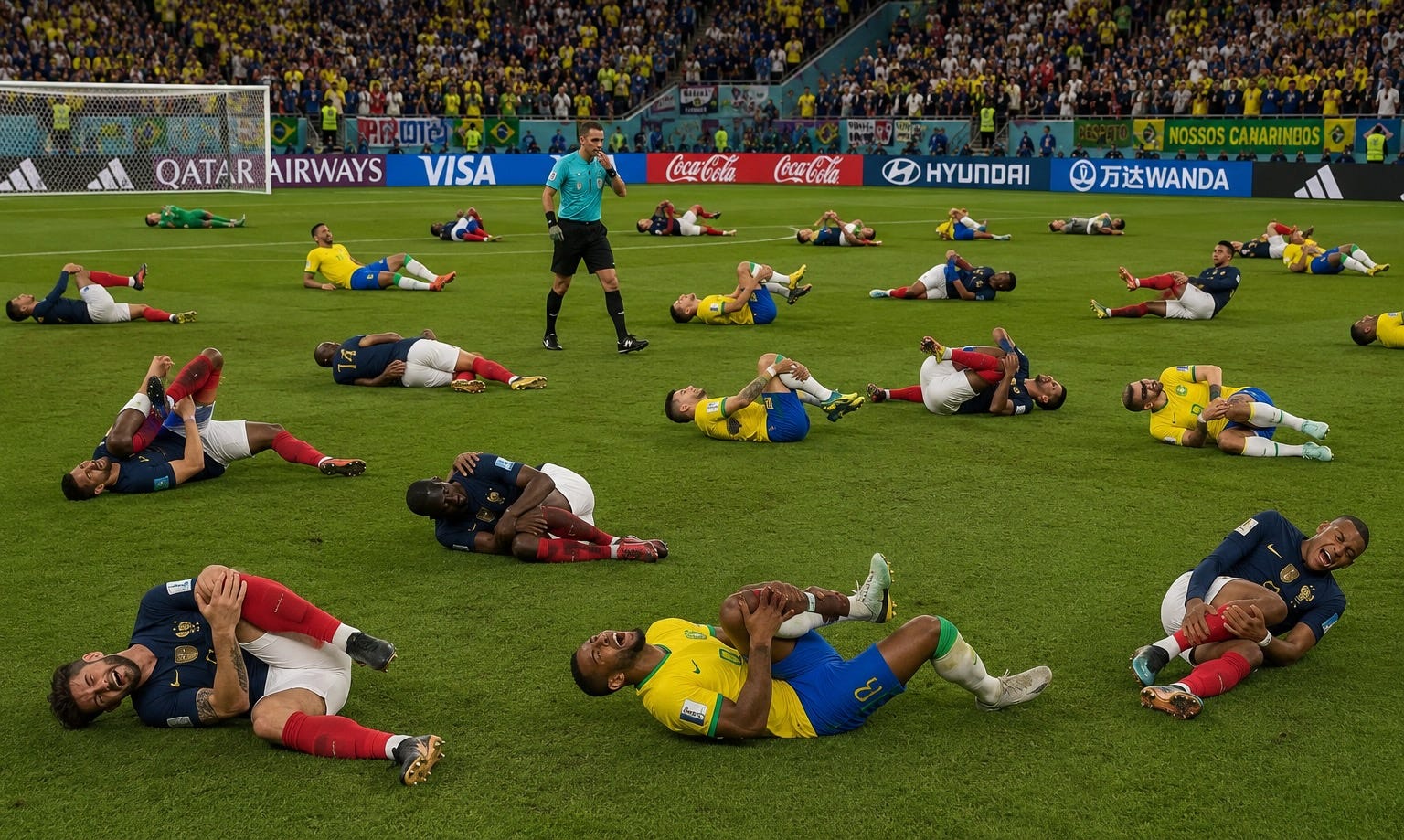
And I won’t lie: There is some dramatic flopping in soccer. It’s the only sport I know of in which a player can suffer as many as three fatal knee injuries in a single game. But if you actually watch some World Cup games, you’ll find that soccer can be highly entertaining, and it doesn’t stop every three minutes for a Bud Light commercial.
But the best part of the World Cup is the fans, the lunatics dedicated individuals who travel from all over the world to support their national team and to party, not necessarily in that order. If you live in one of the 11 U.S. cities that will be hosting World Cup games — Atlanta, Boston, Dallas, Houston, Kansas City, Los Angeles, Miami, New York, Philadelphia, San Francisco and Seattle — I hope you make these international visitors feel welcome.
I’m very pleased to note that one of the teams that will be playing in my city, Miami, is Brazil, which means there will be many thousands of Brazilians here, which makes me happy. But it gets even better. Because the team that will be opposing Brazil in that game — the team that will be coming to Miami, bringing with it a legendarily outgoing fan base — is...
OK, here’s a hint:
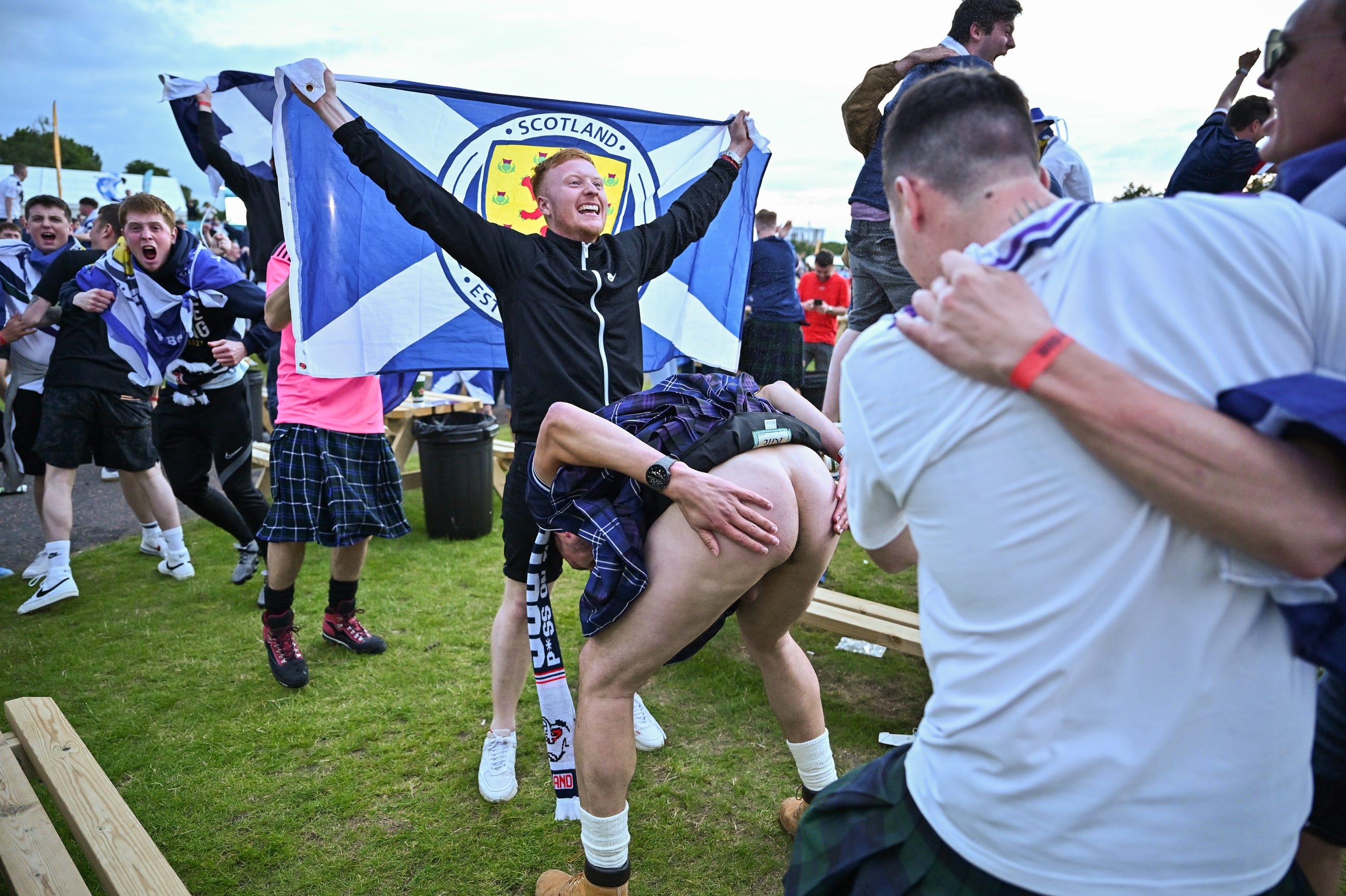
It’s gonna be fun.
We’ve reached the end (Har!) of this week’s Substack, which we now turn over to you world-class paying subscribers. Today we have three scientific polls.
I live in Kansas City, which is one of the World Cup host cities. I plan to treat this like a pending snow storm by buying lots of food and toilet paper and staying locked inside for a few weeks. Party on!
It’s seldom these days that I laugh out loud at anything I read online. However, your photo of “mass simulation“ had me figuratively rolling on the floor. (At age 88 I don’t actually roll on the floor because I can’t get up again, but I did move about quite a bit in my recliner.)