
Mexico
A factual report.

A question that is no doubt on your mind, as a concerned individual in these turbulent times, is: “What’s the current situation in Mexico? Specifically, how is the supply of margaritas holding up?”
In an effort to address your concerns, this past week I spent four days in Mexico, despite the very real physical risk that a portion of my expenses would be tax-deductible. Although I frankly have no idea what my expenses actually were. I say this because the money used in Mexico is the “peso,” and when I got pesos down there from an ATM, it printed out this:

As I interpret this, it means that when you pay for something in pesos, and you want to know how much it is in dollars, you have to divide, or possibly multiply, the price by 16.1248, which is impossible to do in your head, especially when you factor in the margaritas. So I did a lot of rough estimating. If the price of something was, say, 1,420 pesos, I’d roughly estimate that it was somewhere in the range of three to 167 dollars. Fortunately this is close enough for tax purposes.
The specific place I went to in Mexico is a town called San Miguel de Allende. It was built centuries ago by people who made all of the streets out of large chunky cobblestones in an effort to keep the area from being overrun by elderly Americans.
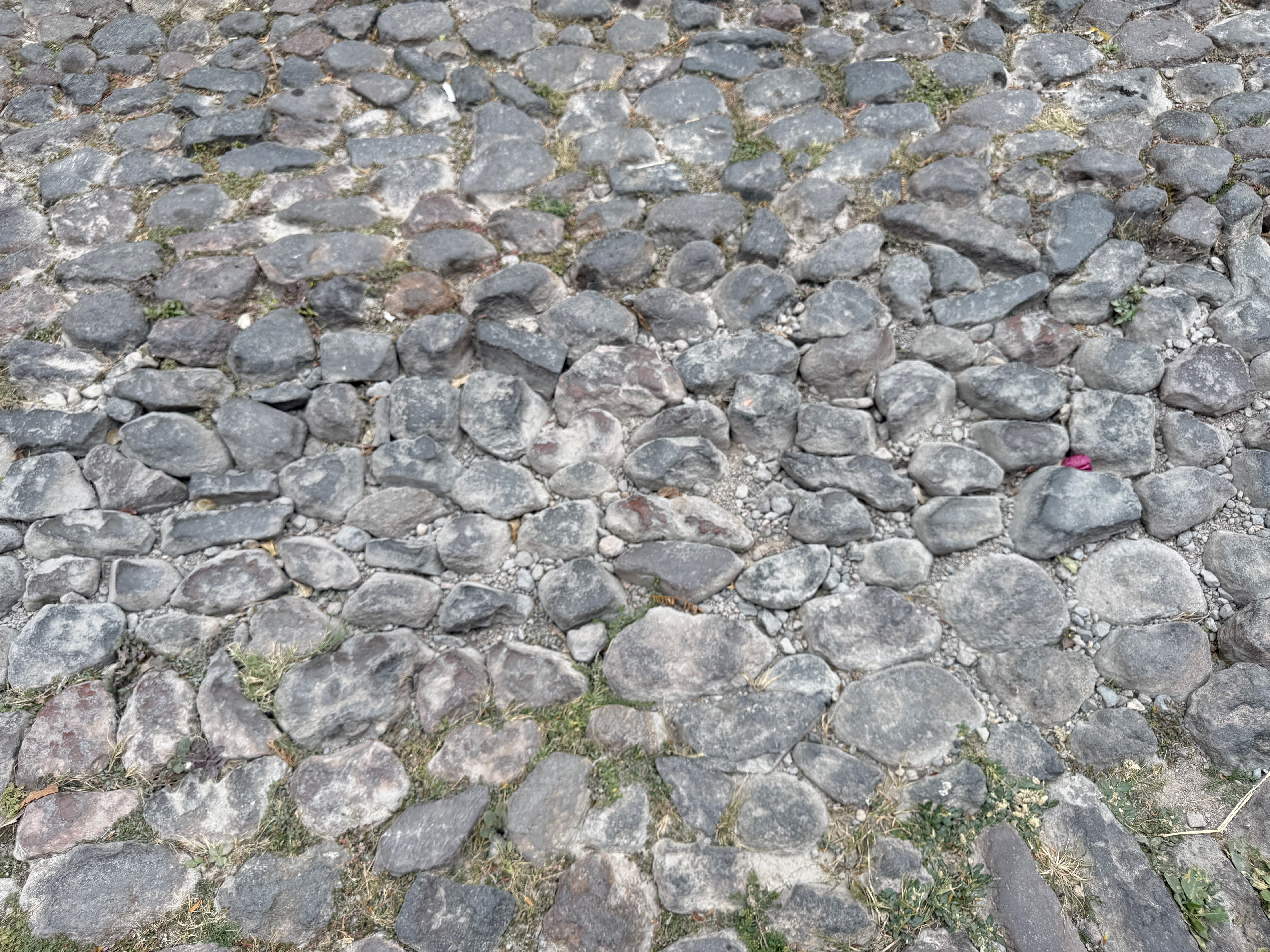
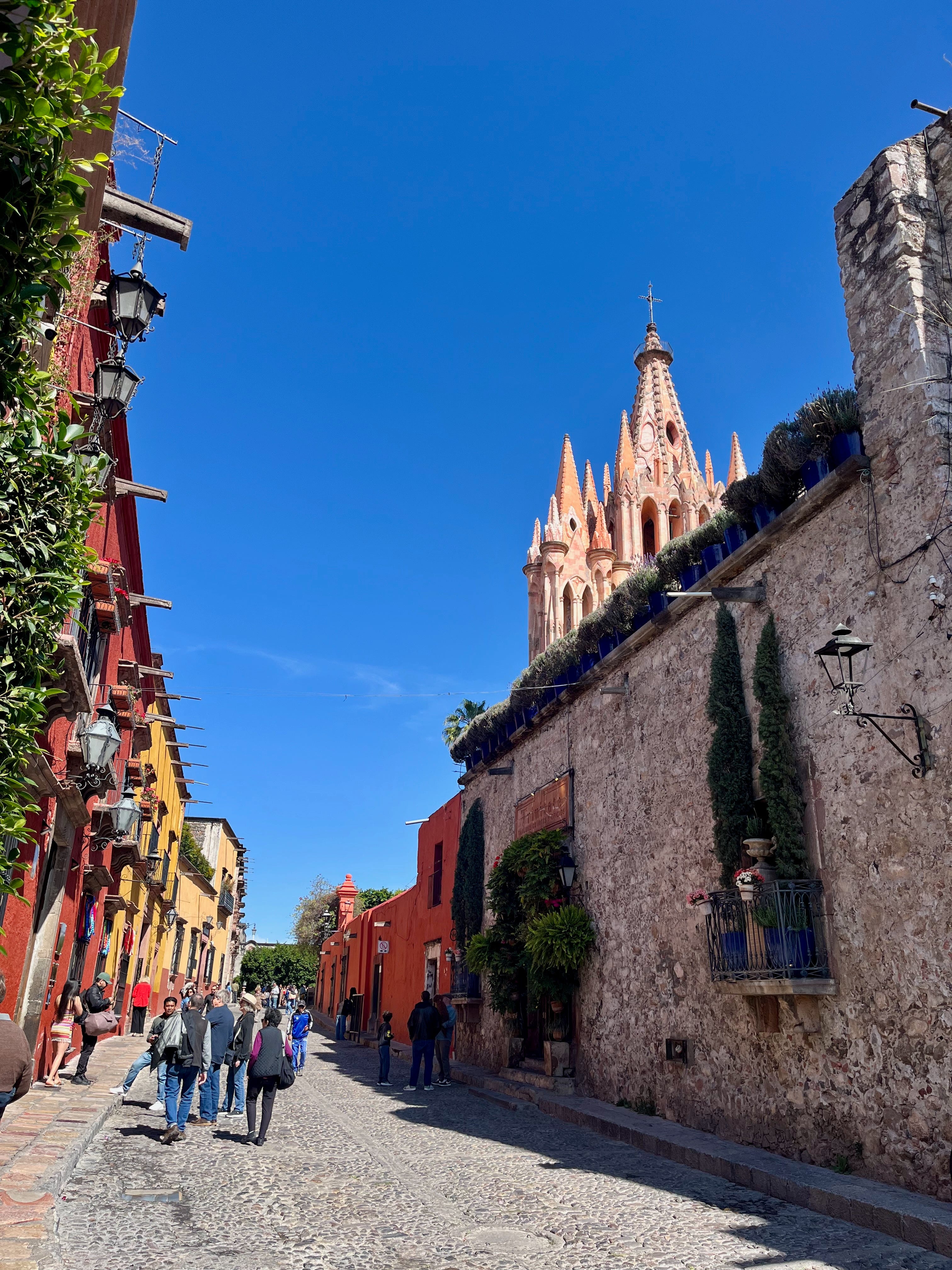
This effort was unsuccessful. Today there are herds of elderly Americans gamely hobbling all over San Miguel de Allende. And with good reason: It’s an impossibly beautiful place.
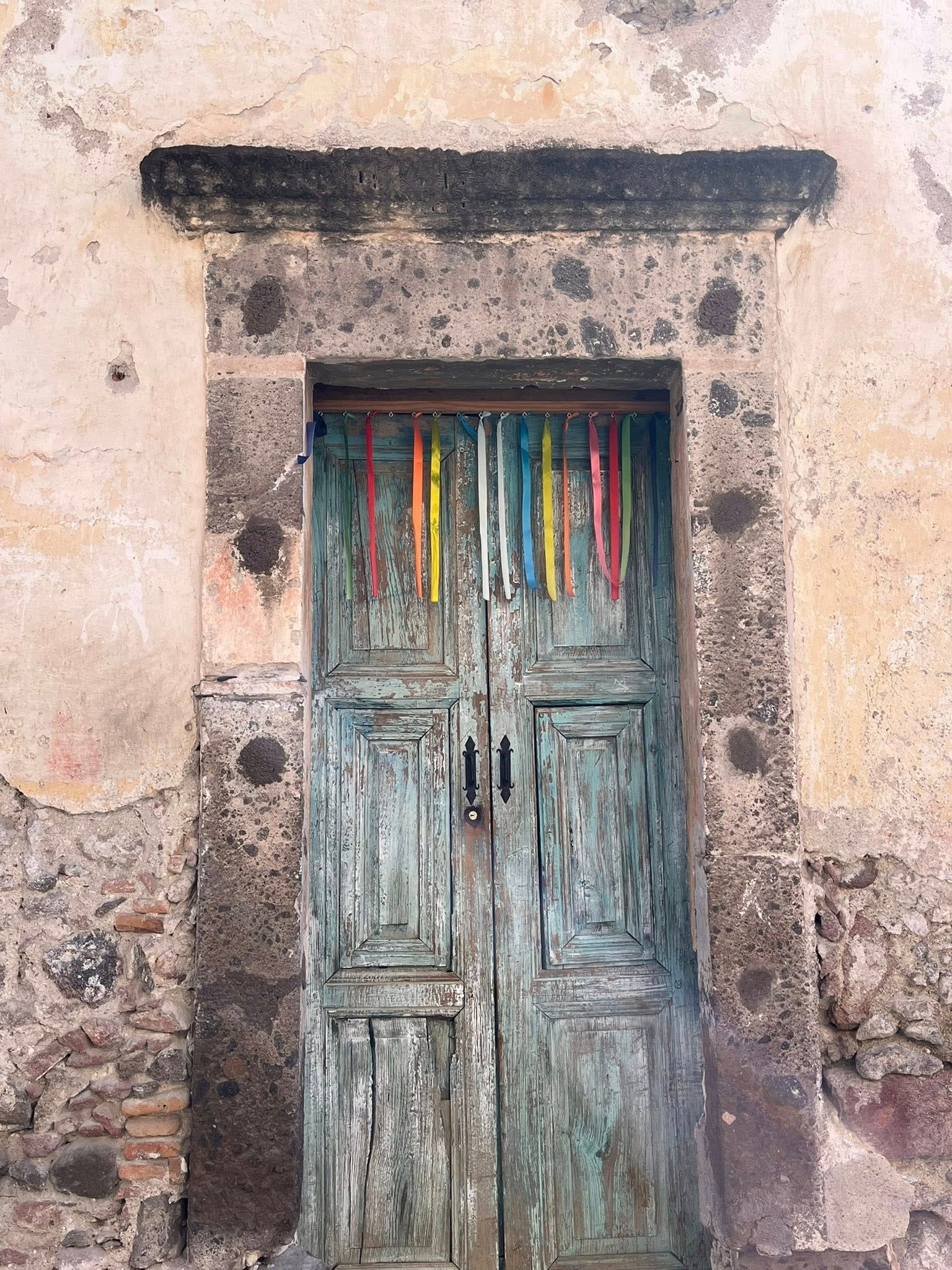
You hobble down beautiful street after beautiful street, past all these beautiful old weathered-wood doors, behind which will usually be some kind of small business -- a shop, or an artist’s gallery, or a restaurant that you may rest assured will have excellent margaritas.
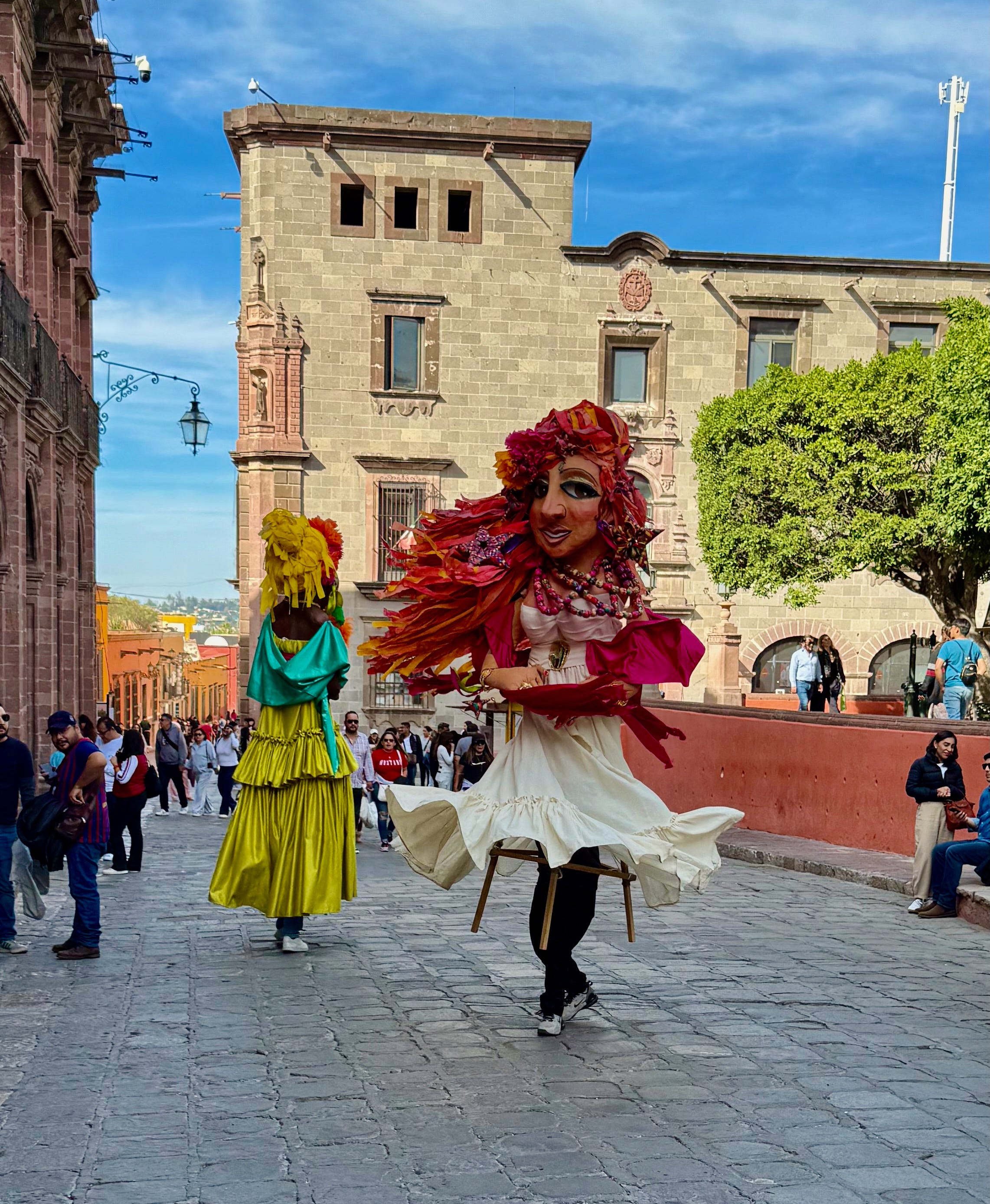
As you hobble along you may encounter traditional Mexican cultural things, such as a mariachi band or large, vaguely disturbing puppets.
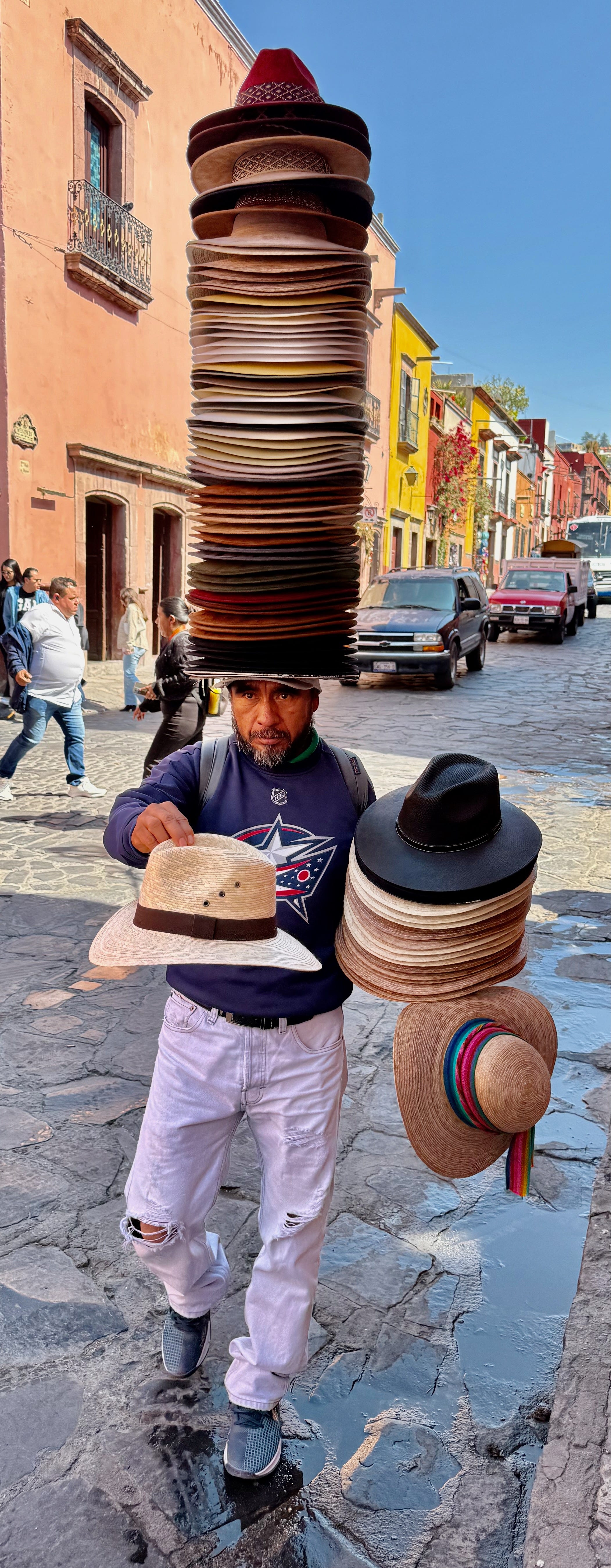
Or you may meet a man who happens to be in a position to offer you a very special price on a hat.
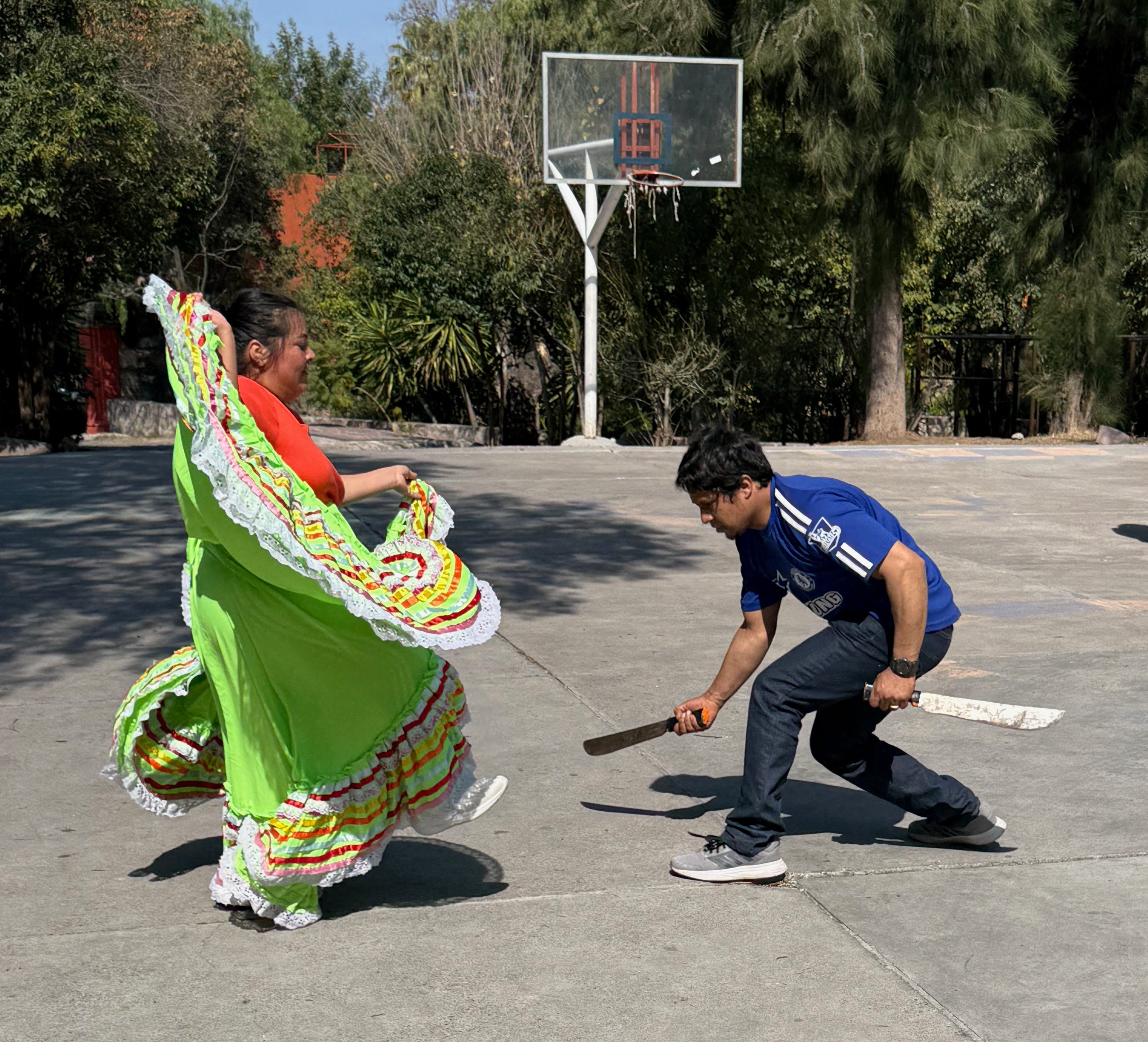
You might see people rehearsing a traditional Mexican folk dance in which a man pretends he’s about to sever a woman’s foot with a machete on a basketball court.
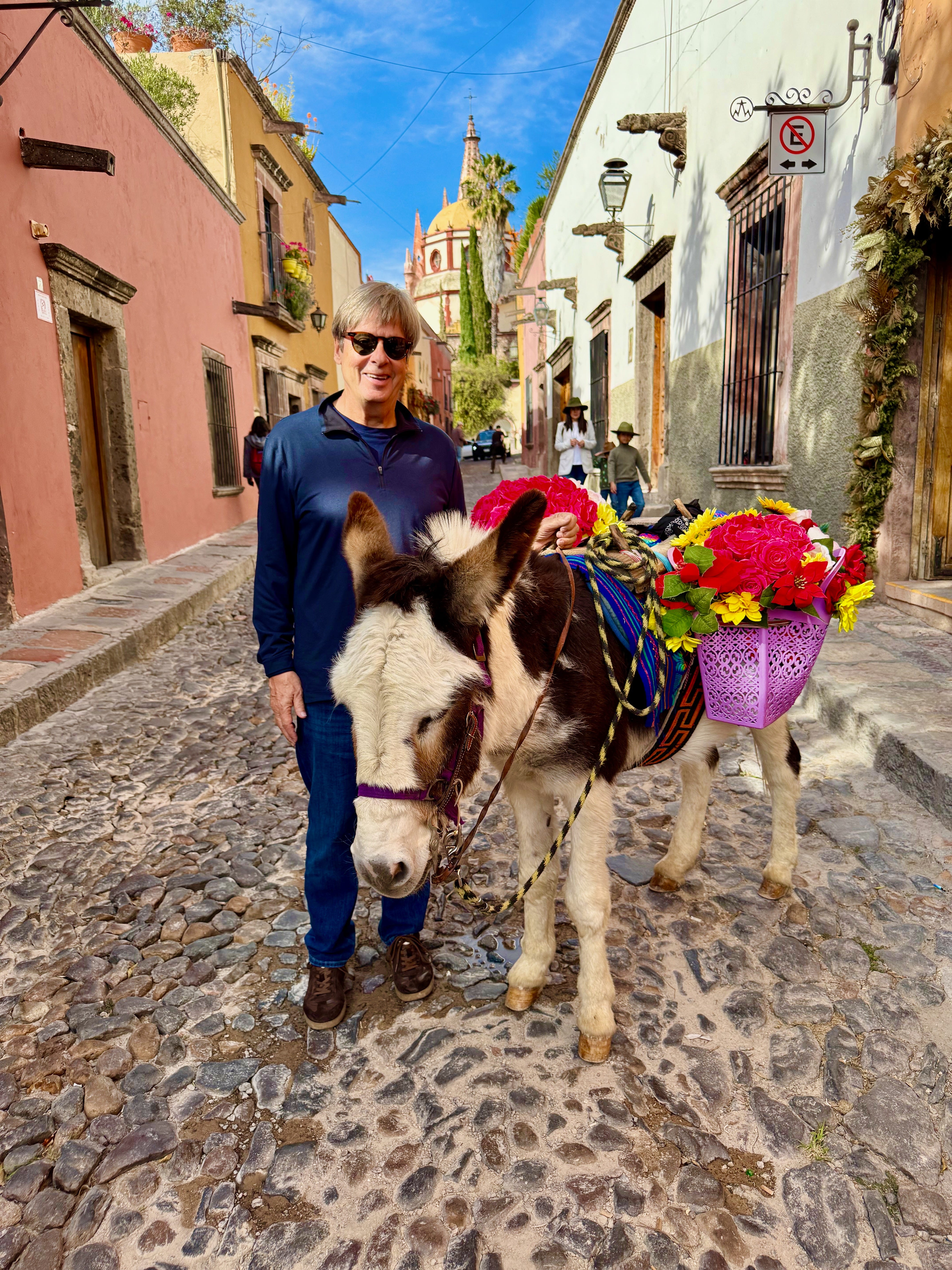
If you’re really lucky you’ll even run into a famous professional burro, Benito the Wedding Donkey, who has his own website but is not too stuck up to pose for photos with tourists.
So it’s definitely a touristy town. But it’s not tacky, and the people are remarkably nice. I’m not talking about the fake-nice kind of nice that you often encounter in touristy places, where you know the locals really wish you’d just hand them some money and go away. The people of San Miguel de Allende are warm and welcoming and genuinely just... nice. In fact as far as I could tell — remember that I’m a professional; do not attempt this kind of generalization at home — everybody in Mexico is nice.
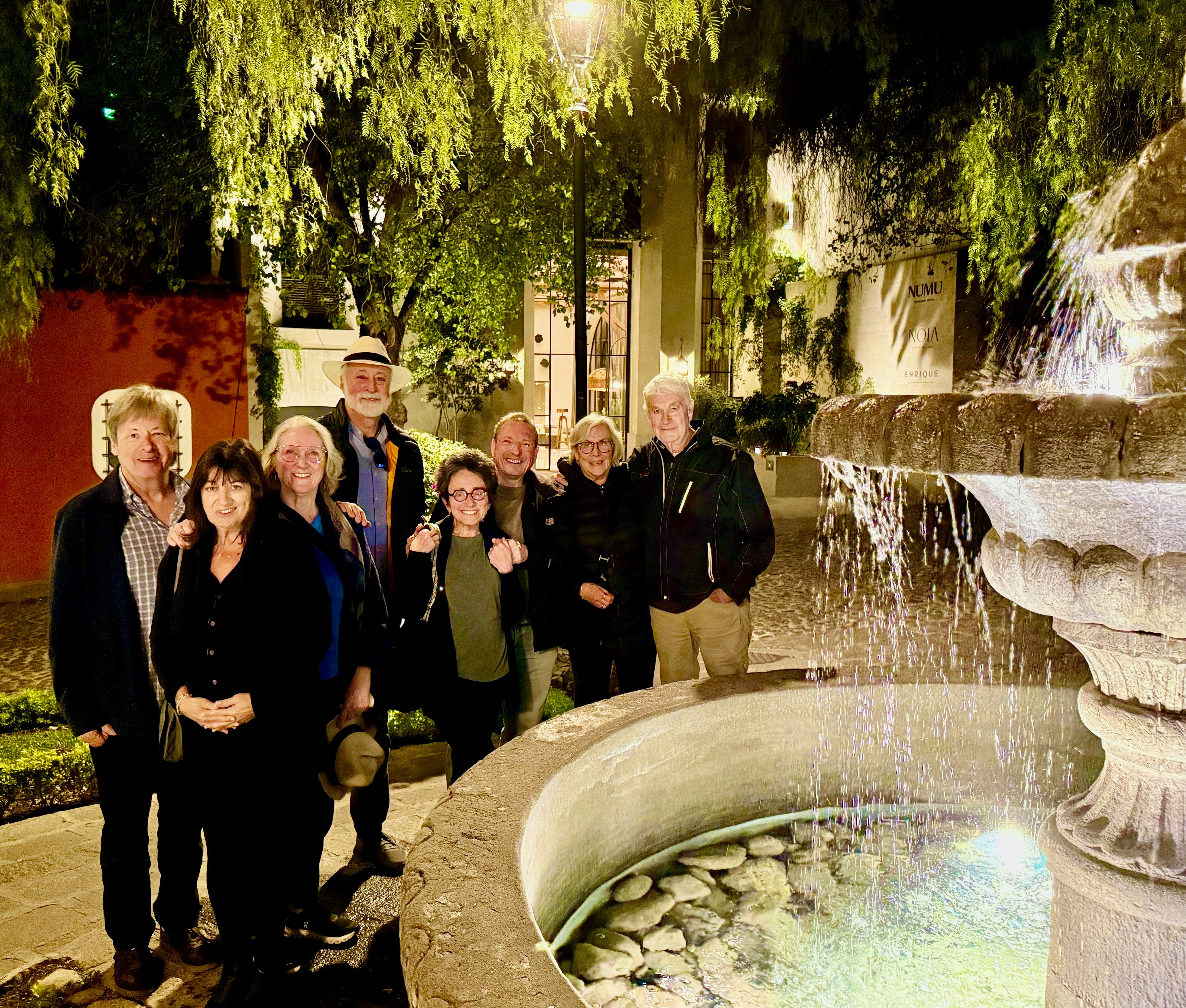
The reason I went there, aside from to provide you with keen journalistic insights about Mexico (It’s nice!) was to hang out with three guys — all named Robert — whom I’ve known since 1965. That was many decades ago, but we are still a quartet of studly hombres, as you can see in this photo of us posing next to a picturesque fountain with our hot-babe wives.
We four guys met as freshmen at Haverford College, where three of us were part of a rock band — perhaps you have heard of it — called the Federal Duck.
The guy on the right is Robert “Buzz” Burger. He was the band manager by virtue of having business acumen, by which I mean a car. Next to him is Libby, his wife of nearly 60 years; the Federal Duck played a role in their courtship. What happened was, we were playing at a freshman mixer between Haverford, which was then all-male, and a nearby all-female institution named (I am not making this up) Beaver College. Libby was one of the Beaver freshmen, and Buzz wanted to impress her. So even though, as manager, he was not technically one of the musicians, he asked the band if he could play rhythm guitar on “Wipeout,” which is a song consisting mainly of drum solos. When the big moment arrived, Buzz strapped on a guitar, and we performed “Wipeout,” and Buzz for the most part correctly executed all three of the chords. It is frankly impossible to imagine how any woman could resist such a thoughtful and romantic gesture, so you will not be surprised to learn that when “Wipeout” ended, Libby...
...OK, Libby was not there. It turned out she had left the mixer earlier with another guy. So Buzz was bummed. But guess what? The next day Libby, having somehow been made aware of the situation, called Buzz to apologize, and he asked her out, and a couple of years later they were married. A lot has changed since then — for example, Beaver College is now “Arcadia University” — but Buzz and Libby are still together, which is why to this day, whenever I hear the phrase “tender and seductive love ballad,” I think “Wipeout.”
The guy next to Libby Burger in the photo is one of my Haverford roommates, Robert “Rob” Stavis, with his wife, Helene. Unfortunately, Rob was not a member of the Federal Duck, but he did become a prominent neonatologist who saved the lives of hundreds of babies. So he’s not a complete loser.
The tall guy wearing a hat is Robert “Bob” Stern, standing next to his wife, Daphne. Bob was my college roommate for three years, one of which we spent crammed into a tiny room containing two beds and a massive festering pile of unwashed laundry, which we kept under control by periodically spraying it with Right Guard deodorant.
Bob was not an original member of the Federal Duck, but he was a gifted, classically trained violinist. So when our original bass player graduated, we asked Bob if he’d be willing to replace him, and Bob said sure. This meant he had to learn, from scratch, how to play electric rock-and-roll bass guitar, a process that took him, including snack breaks, maybe 10 minutes. It turns out that rock bass is a lot simpler, musically, than classical violin, because of the number of notes involved, as we can see from this typical sheet music:

After graduating from Haverford, Bob pursued a music career for a while, but after developing pneumonia on tour he decided to do something healthier. So he became a dentist, and he built a successful practice. His life was cruising along beautifully when, at age 53, completely out of the blue, he developed retinal tears and detachments in both eyes, suddenly and permanently costing him most of his vision. Just like that, his dentistry career was over. It was, as Bob says, “brutal.”
But Bob’s a resilient guy; in time, he picked up his violin and became a fulltime musician again. He and Daphne now spend part of every winter in San Miguel de Allende, which is where Bob met the famous Mexican virtuoso guitarist Gil Gutierrez. They hit it off, and now Bob plays regularly with Gil, in the U.S. and Mexico. In fact our group trip to Mexico was planned around an opportunity to see our old buddy perform. Here’s a snippet of Bob with Gil:
I don’t know the name of the song they’re playing in this snippet, but it’s definitely not from the repertoire of the Federal Duck. It has WAY too many notes.
Watching Bob play was the highlight of our trip to San Miguel de Allende, but we also spent quite a bit of time exploring the local culture, by which I mean shopping. My wife, Michelle, is extremely good at cultural exploration. If you dropped her by parachute onto a polar ice cap a thousand miles from the nearest human habitation, she would, within minutes, find a gift shop, and it would be selling at least one item that would look really cute in our house.
So San Miguel de Allende was a target-rich environment for Michelle, who bought several cute items. I asked her, as I always do, where she plans to put them, since all the accessible surfaces in our house are already occupied by cute items she bought on previous trips; she answered, as she always does, that she would “find room.” I’m beginning to suspect that Michelle has a completely different house somewhere I don’t know about, where she keeps all the old cute items she had to move to make room for new ones.
So we came home from San Miguel de Allende with souvenirs, but also great memories of hobbling around with good old ancient friends in a beautiful — And nice! — place, which you will be relieved to know appears to have an adequate supply of margaritas. Although by the time we left they may have been running a little low.
And now, speaking of nice, let’s hear from you paying subscribers.
As someone who also can't do math after margaritas (or before them, honestly), I deeply appreciate your peso conversion methodology of 'somewhere between 3 and 167 dollars.' This is exactly how I handle all international currency exchange, and coincidentally, also how I estimate my own age.
When I was in SMA, I was told that due to those cobblestones, it’s known as the “City of the Fallen Women”.