
Football
It's time.

The roar of the stadium crowd. The beep of a credit-card machine confirming that you just paid $87.50 for three hot dogs and an order of lukewarm nuggets. The muffled thudding of tailgaters passing out facedown in the parking lot. The grunts of violent men, both on and off the field, pounding each other's brains into tapioca.
Yes, these are the distinctive sounds of American football — or, as it is known throughout the rest of the world, "soccer."
These are the sounds of our true national pastime.
Our national pastime used to be baseball, which is still played in outlying regions such as New York. But over the decades baseball has declined steeply in popularity, because it mainly consists, as a sport, of guys standing around.
In my youth I played Little League baseball, and I did a tremendous amount of standing around. This was fine with me, because I sucked at the other elements of the sport, such as catching the ball, throwing the ball, hitting the ball, and just generally anything involving the ball. My strongest suit, as a baseball player, was chatter. I don't know if Little Leaguers still engage in chatter, but back in my day (1903-04) when my team was standing around out on the field, in serious medical danger of dying from boredom, the dad who was coaching the team would often yell "Let's hear some chatter out there!"
That was the signal for us players to make traditional semi-intelligible baseball noises. My go-to chatter was "humbabe," which I repeated rapidly, as in "humbabehumbabehumbabehumbabe." I believe "humbabe" was supposed to be an expression of encouragement to the pitcher, but for me it was just a random blob of sound I could mindlessly emit, thus freeing me to focus all of my mental energy on praying to God not to let the ball come anywhere near me.
Most of the chatter was aimed at disrupting the batter's concentration. I base this statement on an email survey I took of some guys who are roughly my age, asking if they remembered chattering in Little League. Here are their responses:
Jeffrey Brown, journalist and author: I remember chanting something like "hey batta-batta-batta, hey batta-batta-batta." Maybe "hey badda-badda-badda." Presumably to distract the batter. But now it sounds more like some kind of ritual prayer to make pancakes rise.
C.J. Box, author: "Hey-batter-batter-batter-batter” endlessly. Can’t say it worked…
Scott Turow, author: I remember a mocking, “HeyBattuh,heyBattuh,heyBattuh” spoken aloud, and the recurrent secret thought at second base, “Don’t hit it to me."
Paul Levine, author: "Humbabe" is classic. We'd also chant, "Easy out, easy out!" to rattle the batter. Also, "Hey, batter batter." No idea why.
Alan Zweibel, author: "Up the ladder, down the ladder, what's the matter with the batter? He stinks!"
Jeff Greenfield, journalist and author: I played highly unorganized baseball, where — it being a Jewish neighborhood — most vocalizing was in the form of arguments. At summer camp, the chatter was "nobattanobattanobatta." In middle age, I played softball during summers, where much of the chatter was: "Oww, my back!"
Stephen King, Red Sox fan: “Humbabe” was a big one. “Chuck the pill” was another. Also: “Swing batta-batta-batta! No batta no batta!”
Ridley Pearson, author: I don’t remember talking, just being bored.
Roy Blount Jr., author: I chattered so vociferously that one of our pitchers asked me as a personal favor to tone it down. He couldn't concentrate. "You the baby you the boy" was my mainstay, but I would also work up special chatter for individual pitchers, one of whom was named Tom Hay. You can see the possibilities. In my prime I played third base, but earlier I chattered from the outfield, which requires more volume.
At this point I'm going to distract you with a photograph I took recently of a large lizard that was standing on my patio, clearly thinking about pooping in the pool. While you're looking at it I'm going to take a quick peek back at the beginning of this essay to see if I can remind myself what the topic is.
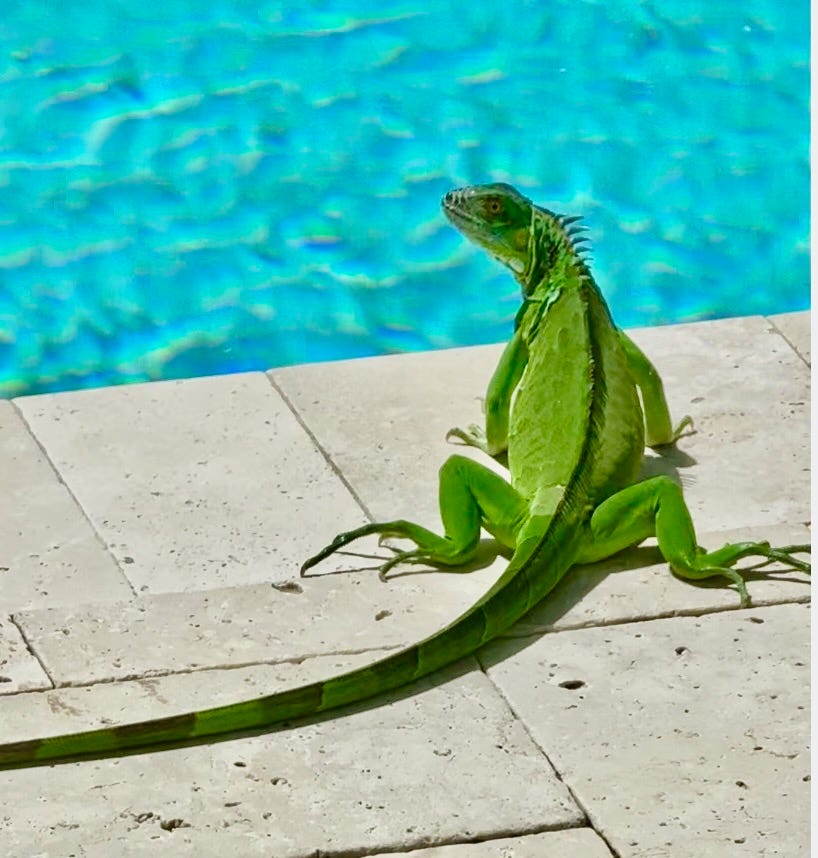
OK, apparently the topic is football, which is our national pastime. To resume:
The two most popular forms of American football are professional football, in which the players get paid and do not have to attend classes, and college football, in which the players get paid and do not have to attend classes. Also hugely popular is "fantasy football," a fun activity that enables people who know absolutely nothing about the sport to talk about their imaginary teams until you want to tase them.
Me, I root for a real team, the Miami Dolphins. I've been a fan ever since I moved to Miami from the United States in 1986. I'm loyal to the Dolphins, no matter whether they're having a bad year, or just a really mediocre year. I would also be loyal to them if they had a good year, but that never happens. That is not what we call "Miami Dolphins football." I often joke that the Dolphins could start the season with ten straight wins and still find a way to finish six and 11. But I'm not entirely sure it's a joke.
I think part of the Dolphins' problem is their name. It does not instill fear. When you think of a dolphin, you think of a squeaking, smiley-faced critter balancing a beach ball on its snout; whereas other NFL teams are named for fearsome predators, the kind you can picture with the blood of their prey dripping from their jaws, like bears, or lions, or Washington Commanders.
Maybe the Miami team should have been named after a scarier South Florida life form, something along the lines of:
-- The Invasive Species
-- The Uninsured Motorists
-- The Cockroaches the Size of Toasters
-- The Pervasive Wood Rot
-- The Pooping Patio Lizards.
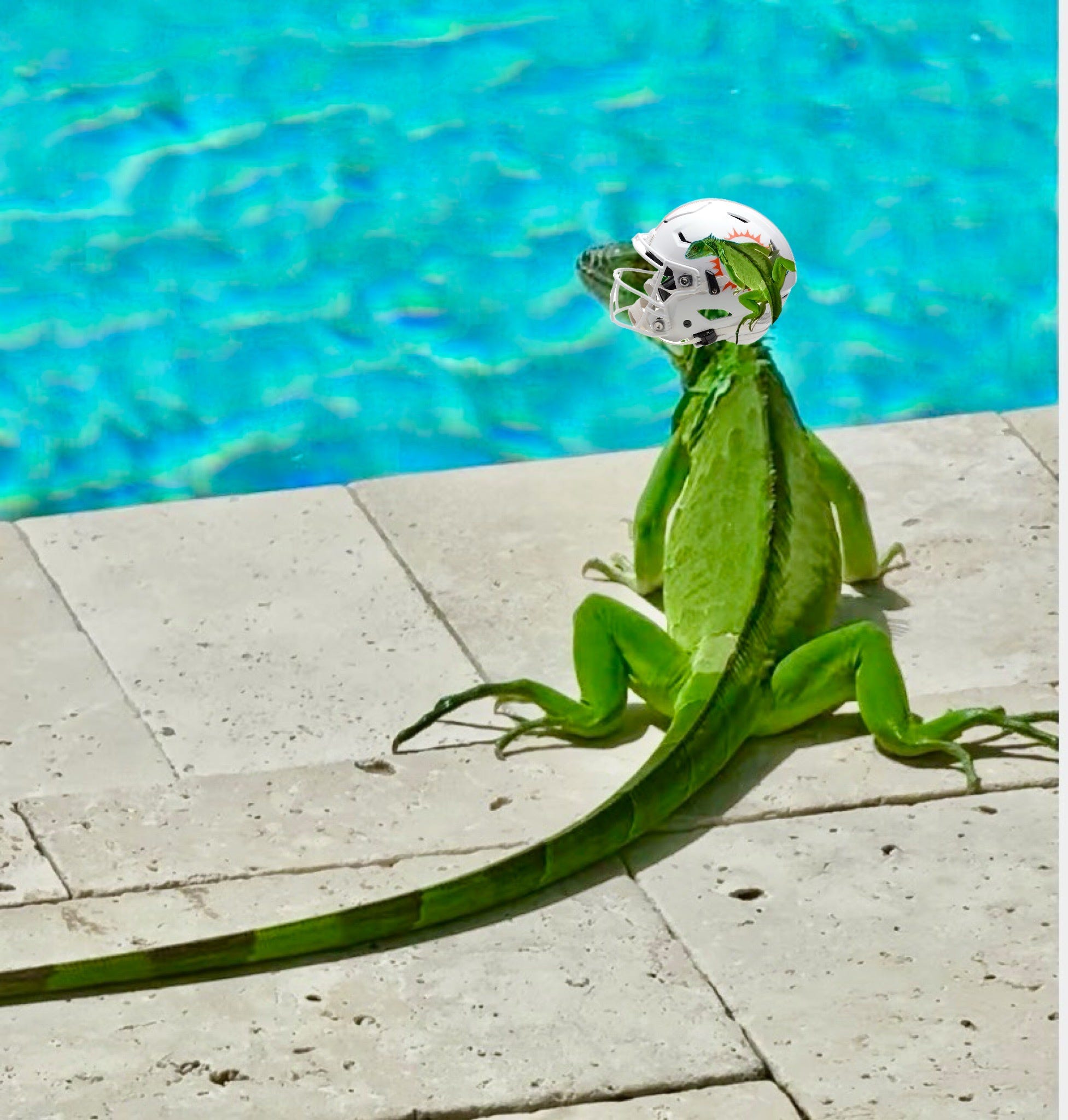
Despite their name, there was a time, decades ago, when the Dolphins were actually good. Back then the coach was Don Shula, a legendary hardass. To say he was intimidating is like saying the Pacific Ocean is moist. Do you remember the scene in the first Star Wars, when the military officer mocks Darth Vader, and Vader causes the officer to almost choke to death just by looking at him? Don Shula could do that to sportswriters. You did not want to be the target of a Shula stare. I was the target once, years ago, and I still have burn marks on my face.
Here’s a picture of Shula on the sideline during a game, looking unusually pleased:
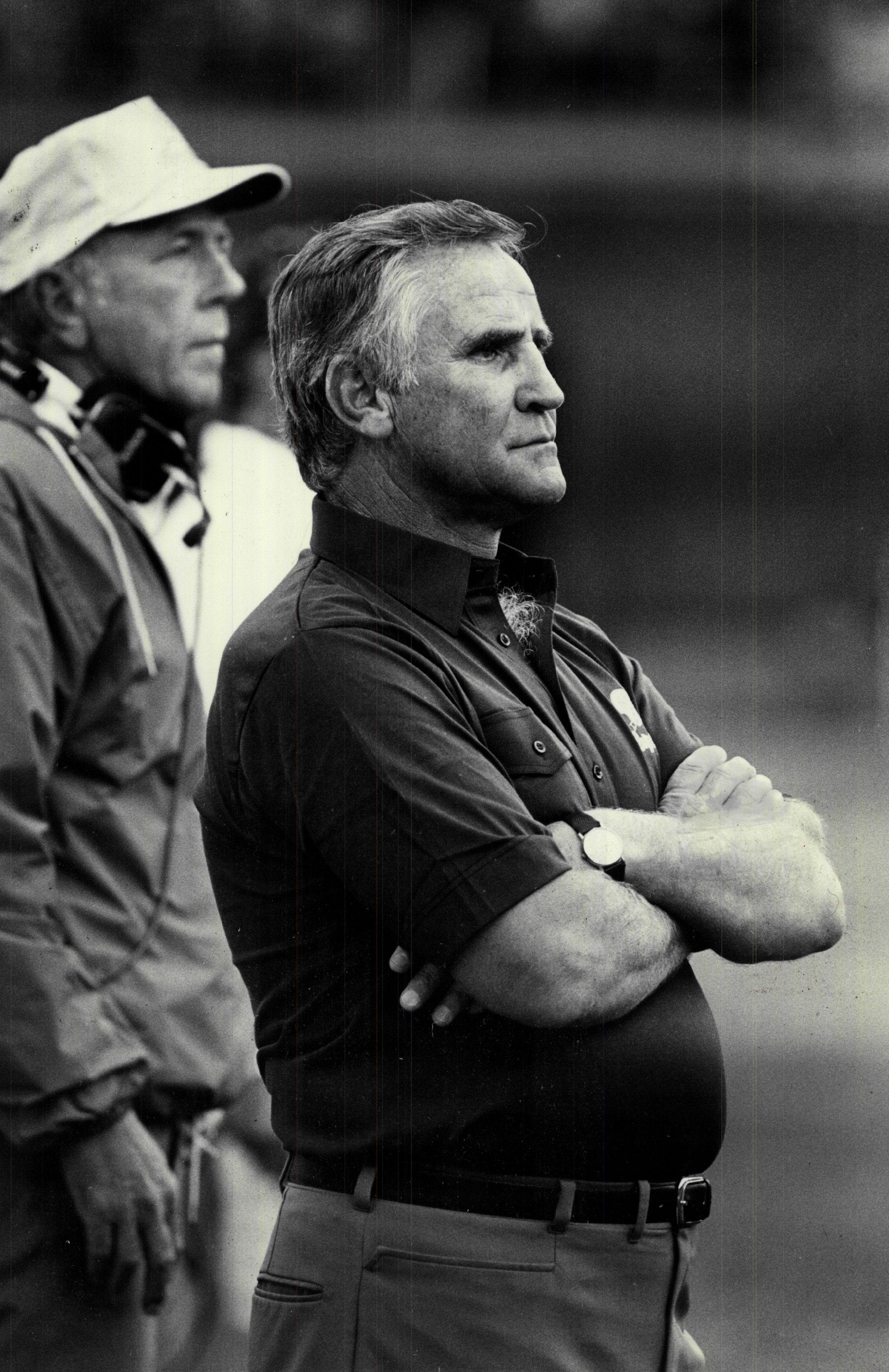
So that was Don Shula, the Hall of Fame coach who will forever be the frowning face of the Dolphins franchise; the extremely manly masculine man who led Miami to an undefeated season and two Super Bowl wins; the standard against which all his successors will be measured.
Here's our current head coach, Mike McDaniel:
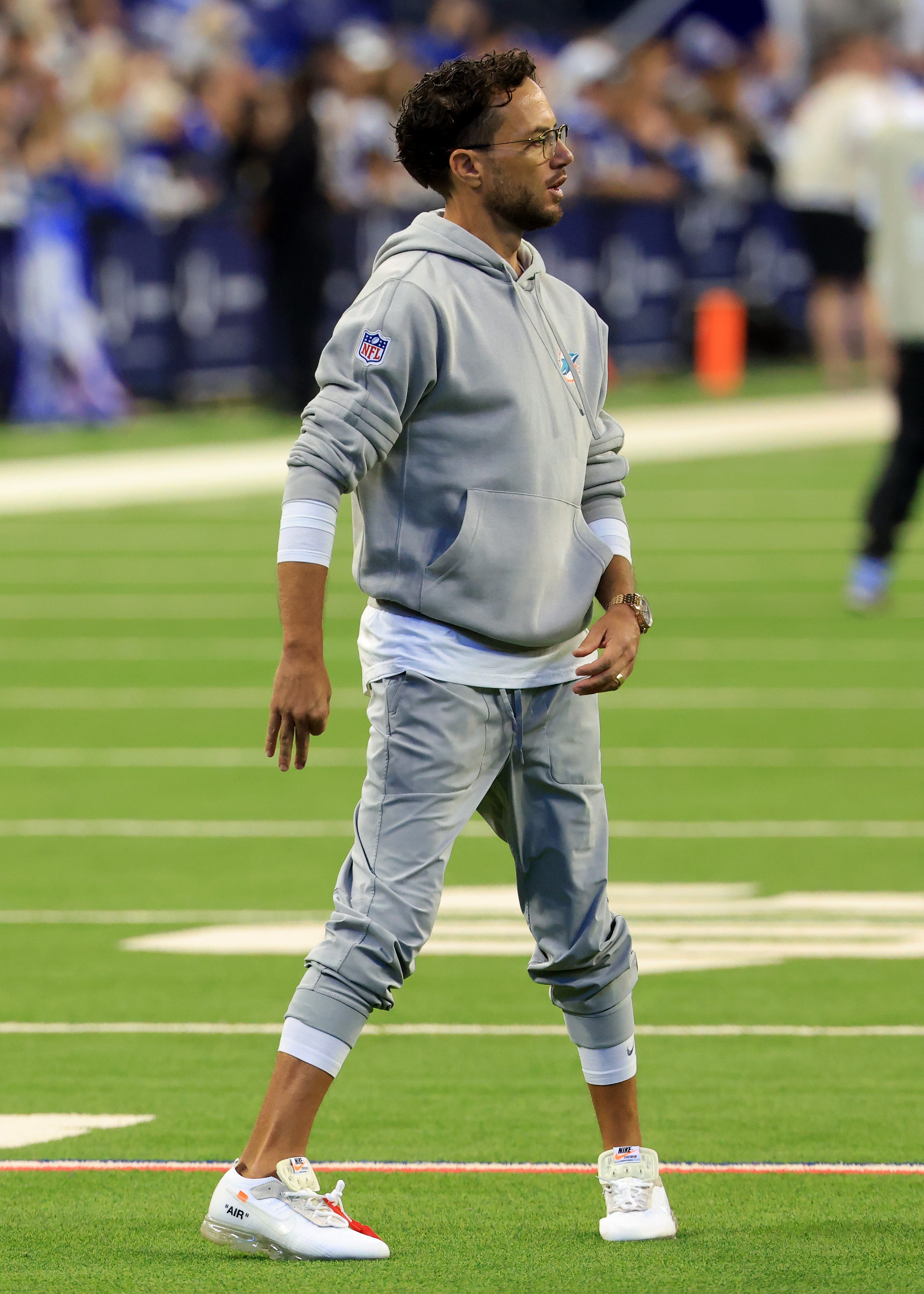
That's right: The current head coach of the Miami Dolphins is 14 years old.
No! I'm kidding! He's 17.
No, seriously, he's a grown man, almost as old as my son. And by all accounts he's an excellent coach, innovative and highly knowledgeable. He also seems like a genuinely good guy — upbeat, unassuming, funny, sometimes a little goofy. I like him a lot, and I'm totally rooting for him to succeed. It's just that he's so... different from the traditional Don Shula template for a football coach. Like we traded Darth Vader for Jiminy Cricket.
But this is a new era, and maybe it calls for a new kind of coach, a coach who is unafraid to take the field — nobody EVER said this about Don Shula — wearing Capri pants.
So as a loyal Dolphins fan, I say to Coach McDaniel, as we embark upon this new season, and I truly mean this from the bottom of my heart: humbabe.
And now it's time to find out what you paying subscribers think about whatever this Substack was about. (I for one have no idea.)
I played little league as a youth, too. Had a triple-zero batting average. First time I made contact with the ball I sent it careening toward my manager's head. Knocked him out cold. His son then attacked me as if it were attempted murder. The opposing coach had to peel him off my neck. Second time I made contact it was a good shot, but I forgot to run. True story.
I wish to compliment Sophie for her Photoshop skills